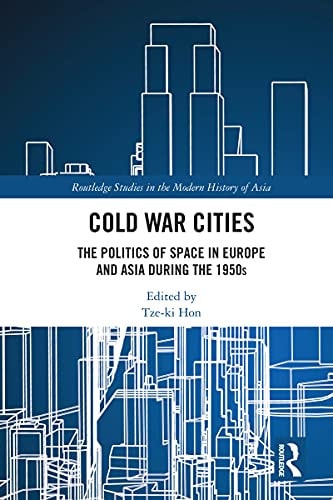
Cold War Cities: The Politics of Space in Europe and Asia during the 1950s
0
0
As an Amazon Associate and affiliate partner, Menrva Books earns from qualifying purchases. Learn more
Author Description
This Book Is A Dynamic Study Of The Range Of Experiences Of The Cold War In Europe, East Asia And Southeast Asia In The Twentieth Century. Comprised Of Ten Chapters From A Diverse Team Of Scholars From Europe, East Asia, And North America, This Edited Volume Furthers The Study Of The Cold War In Two Ways. First, It Underscores The Global Scope Of The Cold War. Beginning From Europe And Extending To East And Southeast Asia, It Focuses Attention On The Overlapping Local, National, Regional, And International Rivalries That Ultimately Divided The World Into Two Opposing Camps. Second, It Shows That The Cold War Had Different Impacts In Different Places. Although Not All Continents Are Included, This Volume Demonstrates That The Bipolar System Was Not Monolithic And Uniform. By Comparing Experiences In Various Cities, This Book Critically Examines The Ways In Which The Bipolar System Was Circumvented Or Transformed - Particularly In Places Where The Line Between The Free World And The Communist World Was Unclear. Cold War Cities Will Appeal To Students And Scholars Of History And Cold War Studies, Cultural Geography And Material Cultures, As Well As East And Southeast Asian Studies-- Provided By Publisher.
Menrva's Summary
THE THESIS
This book investigates how the political landscape of the Cold War shaped urban development and spatial politics in key cities across Europe and Asia during the 1950s. The volume, comprising ten chapters by a diverse team of scholars, examines the global scope of the Cold War by focusing on overlapping local, national, regional, and international rivalries. It demonstrates that the bipolar system was not monolithic, exploring how different cities experienced and circumvented or transformed its impacts, particularly in regions where the division between the 'Free World' and the 'Communist World' was ambiguous. The book critically examines these dynamics through comparative urban case studies.**
THE SCOPE MAP
- Analysis of the Cold War's impact on urban development in Europe and Asia during the 1950s.
- Exploration of the global scope of the Cold War and its regional manifestations.
- Focus on the interplay of local, national, regional, and international rivalries.
- Examination of how the bipolar system was circumvented or transformed in various urban contexts.
- Case studies from cities where the ideological divide was unclear.
- Contributions from a diverse team of scholars from Europe, East Asia, and North America.
- Insights into the politics of space and urban planning under Cold War pressures.
THE AUTHORITY PERSPECTIVE
This edited volume is positioned as a dynamic study for students and scholars of history and Cold War studies, cultural geography, material cultures, and East and Southeast Asian studies. The collection aims to underscore the global scope of the Cold War and highlight its varied impacts across different urban environments. By comparing experiences in various cities, the book critically examines how the bipolar system was navigated and altered, particularly in ambiguous geopolitical zones. The diverse scholarly perspectives promise a nuanced understanding of Cold War urbanism.
Page Count:
184
Publication Date:
2021-08-26
Publisher:
Routledge
ISBN-10:
0429608268
ISBN-13:
9780429608261
History
Non-Fiction
Asian Studies
Urban Studies
Community Tags
Similar Books