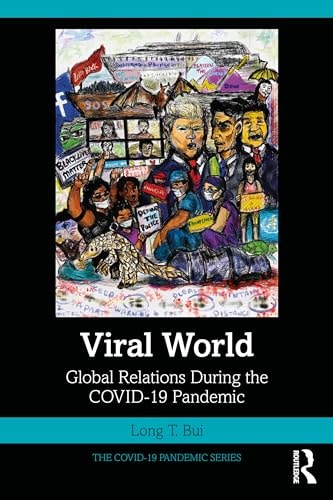
Viral World: Global Relations During the COVID-19 Pandemic
0
0
As an Amazon Associate and affiliate partner, Menrva Books earns from qualifying purchases. Learn more
Author Description
This book argues that the catastrophe of COVID-19 provided a momentous time for groups, institutions, and states to reassess their worldviews and relationship to the entire world. Following multiple case studies across dozens of countries throughout the course of the pandemic, this book is a timely contribution to cultural knowledge about the pandemic and the viral politics at the heart of it. Mapping the various forms of global consciousness and connectivity engendered by the crisis, the book offers the framework of "viral worlding," defined as viral forms of relationality, becoming, and communication. It demonstrates how worlding or world-making processes accelerated with the novel coronavirus. New emergent forms of being global "went viral" to address conditions of inequality as well as forge possibilities for societal transformation. Considering the tumult wrought by the pandemic, Bui analyzes progressive movements for democracy, abolition, feminism, environmentalism, and socialism against the world-shattering forces of capitalism, authoritarianism, racism, and militarism. Focusing on ways the pandemic disproportionately impacted marginalized communities, particularly in the Global South, this book juxtaposes the closing of their lifeworlds and social worlds by hegemonic global actors with increased collective demands for freedom, mobility, and justice by vulnerable people. The breadth and depth of the book thus provides students, scholars, and general readers with critical insights to understanding the world(s) of COVID-19 and collective efforts to build better new ones.--Page iii.
Menrva's Summary
THE THESIS
This book investigates how the COVID-19 pandemic served as a catalyst for global reassessment of worldviews and interrelations. The author, Long T. Bui, utilizes multiple case studies from numerous countries during the pandemic to explore the concept of "viral worlding"—viral forms of relationality, becoming, and communication that accelerated world-making processes. The book examines how these emergent global forms addressed inequality and fostered societal transformation, analyzing progressive movements against forces like capitalism and authoritarianism. It specifically focuses on the pandemic's disproportionate impact on marginalized communities, particularly in the Global South, contrasting their restricted lifeworlds with amplified demands for justice and freedom.
THE SCOPE MAP
- Analysis of global consciousness and connectivity engendered by the COVID-19 crisis.
- Introduction and application of the framework "viral worlding".
- Case studies across dozens of countries throughout the pandemic.
- Examination of progressive movements (democracy, abolition, feminism, environmentalism, socialism).
- Analysis of counter-forces (capitalism, authoritarianism, racism, militarism).
- Focus on the disproportionate impact of the pandemic on marginalized communities, especially in the Global South.
- Juxtaposition of hegemonic actors' actions with collective demands for freedom, mobility, and justice by vulnerable populations.
THE AUTHORITY PERSPECTIVE
The book is presented as a timely contribution to understanding the pandemic's cultural impact and "viral politics." It aims to provide students, scholars, and general readers with critical insights into the COVID-19 era and the collective efforts to construct better futures. The author's framework of "viral worlding" is central to demonstrating how the pandemic accelerated processes of global becoming and relationality. The analysis contrasts the challenges faced by marginalized communities with their increased demands for societal transformation and justice.
Page Count:
256
Publication Date:
2024-01-01
Publisher:
Routledge, Taylor & Francis Group
ISBN-10:
1032694521
ISBN-13:
9781032694528
Non-Fiction
Politics
History
COVID-19
Global Relations
Sociology
Community Tags
Similar Books