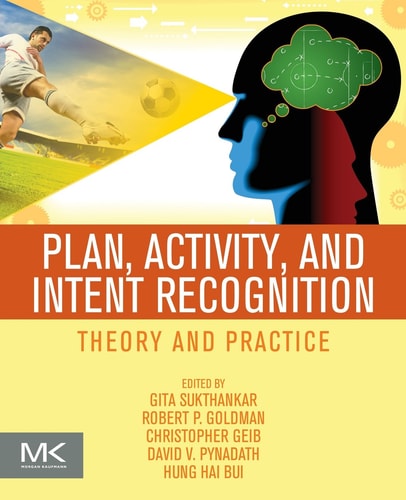
Plan, Activity, and Intent Recognition: Theory and Practice
0
0
As an Amazon Associate and affiliate partner, Menrva Books earns from qualifying purchases. Learn more
Author Description
Plan recognition, activity recognition, and intent recognition together combine and unify techniques from user modeling, machine vision, intelligent user interfaces, human/computer interaction, autonomous and multi-agent systems, natural language understanding, and machine learning. Plan, Activity, and Intent Recognition explains the crucial role of these techniques in a wide variety of applications including: • personal agent assistants • computer and network security • opponent modeling in games and simulation systems • coordination in robots and software agents • web e-commerce and collaborative filtering • dialog modeling • video surveillance • smart homes In this book, follow the history of this research area and witness exciting new developments in the field made possible by improved sensors, increased computational power, and new application areas. Combines basic theory on algorithms for plan/activity recognition along with results from recent workshops and seminars Explains how to interpret and recognize plans and activities from sensor data Provides valuable background knowledge and assembles key concepts into one guide for researchers or students studying these disciplines
Menrva's Summary
THE THESIS
This book investigates the convergence of plan, activity, and intent recognition techniques to understand and model user behavior. The authors, leading researchers in the field, synthesize foundational theories and recent advancements in areas such as user modeling, machine vision, intelligent interfaces, and machine learning. They explore how these combined techniques are crucial for a diverse range of applications, from personal assistants and security systems to robotics, e-commerce, and surveillance, providing a comprehensive guide for researchers and students.
THE SCOPE MAP
- History and evolution of plan, activity, and intent recognition research.
- Algorithms and theoretical frameworks for interpreting sensor data to recognize plans and activities.
- Applications in personal agent assistants, computer and network security, and opponent modeling.
- Role in coordination for robots and software agents, and in web e-commerce.
- Use in dialog modeling, video surveillance, and smart home systems.
- Insights from recent workshops and seminars on the subject.
THE AUTHORITY PERSPECTIVE
This book serves as a foundational text, bringing together disparate research threads into a cohesive overview of plan, activity, and intent recognition. Its strength lies in bridging theoretical algorithms with practical applications across numerous domains, making it a valuable resource for both students and established researchers. The compilation of key concepts and recent developments offers a comprehensive guide for those entering or advancing within this interdisciplinary field. The text is structured to provide essential background knowledge while highlighting the impact of new sensors and computational power on the domain.
Page Count:
424
Publication Date:
2014-01-01
Publisher:
Elsevier S & T
ISBN-10:
0123985323
ISBN-13:
9780123985323
Science & Technology
Non-Fiction
Machine Learning
Computer Science
Community Tags
Similar Books