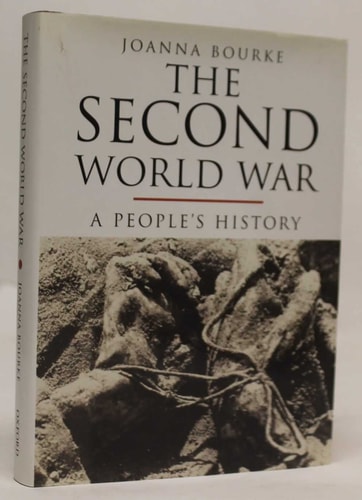
The Second World War: A People's History
0
0
As an Amazon Associate and affiliate partner, Menrva Books earns from qualifying purchases. Learn more
Author Description
The Second World War saw an unprecedented expansion of suffering beyond the frontlines. Of the 1,355,000 tons of bombs dropped on Germany, for instance, most fell on non-military targets, and of the 55 million people killed worldwide, two-thirds were civilians. In The Second World War: A People's History, Joanna Bourke uncovers the grim stories of death and destruction lost behind those statistics. Using diary entries, oral histories, poetry and letters home, Bourke allows the people that lived and died in the global bloodletting to tell their own stories. Soldiers who fought for all sides and in all of the major theatres tell of the fear and horror of combat. Partisan fighters recount the daring risks they took and the torments of captivity. Civilians describe the anxiety of approaching war, their struggle for survival, and their despair and helplessness as the war consumed their world. Bourke chillingly demonstrates that all of this sorrow and woe was the direct result of political and military decisions on both sides. A brief, objective synopsis of each campaign in the war clarifies the link between strategic, military decisions and the massacre and inhumane treatment of non-combatants--events now known only by names like Nanking, Sobibor, Dresden, and Nagasaki--that was all too common in this brutal war. This short, engaging history is a poignant testimony to the memory of the innocents lost and a stark reminder that their demise was not inevitable--indeed it was often strategically planned and methodically executed.
Menrva's Summary
THE THESIS
This work investigates how the strategic and political decisions of military leaders during the Second World War directly resulted in the unprecedented scale of civilian suffering and death. Professor Joanna Bourke, a historian at Birkbeck College, utilizes a vast array of primary source materials to shift the focus from traditional military maneuvers to the lived experiences of those caught in the conflict. By synthesizing personal accounts with historical analysis, she argues that the destruction of non-combatant populations was not an accidental byproduct of war but a consequence of calculated policy.
THE SCOPE MAP
What You Will Find
- Analysis of civilian casualties in major theaters of war including Nanking, Sobibor, Dresden, and Nagasaki.
- Integration of personal narratives from soldiers, partisans, and civilians.
- Examination of the link between high-level military strategy and human suffering.
Scope Limits
- The text does not provide an exhaustive military history of every tactical engagement of the war.
- It focuses primarily on the human cost rather than the technical specifications of weaponry or logistics.
THE AUTHORITY PERSPECTIVE
Experts recognize this work as a significant contribution to the social history of warfare, noting its effectiveness in humanizing large-scale statistical data. Readers frequently highlight the accessibility of the prose despite the heavy subject matter, making it a valuable resource for those seeking to understand the human impact of global conflict.
Page Count:
256
Publication Date:
2099-11-30
Publisher:
Oxford University Press
ISBN-10:
0192802240
ISBN-13:
9780192802248
Non-Fiction
History
World War
Military History
Social History
Community Tags
Similar Books