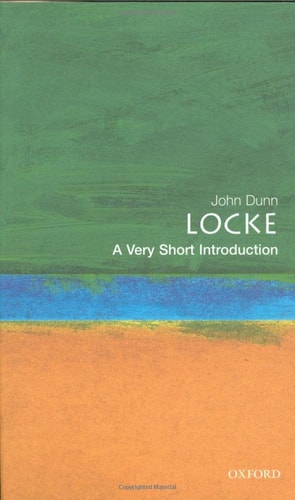
Locke: A Very Short Introduction
0
0
As an Amazon Associate and affiliate partner, Menrva Books earns from qualifying purchases. Learn more
Author Description
John Locke (1632-1704) one of the greatest English philosophers of the late seventeenth and early eighteenth century, argued in his masterpiece, An Essay Concerning Human Understanding, that our knowledge is founded in experience and reaches us principally through our senses; but its message has been curiously misunderstood. In this book John Dunn shows how Locke arrived at his theory of knowledge, and how his exposition of the liberal values of toleration and responsible government formed the backbone of enlightened European thought of the eighteenth century.
Menrva's Summary
THE THESIS
This work investigates how John Locke’s theories on human understanding and political governance shaped the trajectory of Enlightenment thought. John Dunn, a scholar of political theory, examines the intellectual development of Locke by situating his writings within the specific historical and social context of the seventeenth century. The book argues that Locke’s contributions to empiricism and liberal political philosophy are frequently misinterpreted and seeks to clarify his core arguments regarding toleration and the nature of government.
THE SCOPE MAP
What You Will Find
- Analysis of An Essay Concerning Human Understanding
- Examination of Locke’s theories on sensory experience and knowledge
- Historical context regarding seventeenth-century English philosophy
- Overview of Locke’s influence on European liberal values
Scope Limits
- Does not provide a comprehensive biography of Locke’s personal life
- Does not cover the entirety of Locke’s correspondence or minor works
THE AUTHORITY PERSPECTIVE
Experts frequently cite this text as a concise and authoritative introduction to Locke’s philosophical framework. Readers often note the academic density of the prose, which assumes a baseline familiarity with Western political history.
Page Count:
112
Publication Date:
2012-01-01
Publisher:
Oxford University Press
ISBN-10:
0192803948
ISBN-13:
9780192803948
Philosophy
History
Biography
Philosophy British
Epistemology
Community Tags
Similar Books