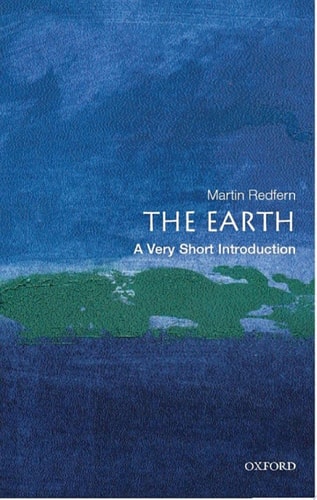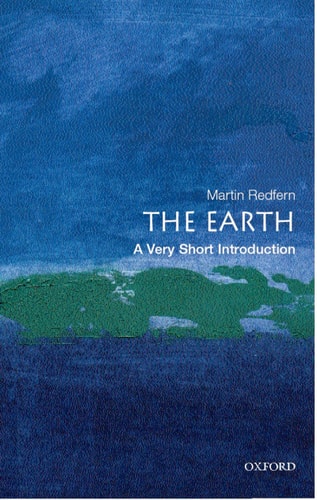
The Earth: A Very Short Introduction
0
0
As an Amazon Associate and affiliate partner, Menrva Books earns from qualifying purchases. Learn more
Author Description
Around 30 years ago, two things happened that were to revolutionize the understanding of our home planet. First, geologists realized that the continents themselves were drifting across the surface of the globe and that oceans were being created and destroyed. Secondly, pictures of the entire planet were returned from space. Suddenly, the Earth began to be viewed as a single entity; a dynamic, interacting whole, controlled by complex processes we scarcely understood.This Introduction explores emerging geological research and explains how new advances in the understanding of plate tectonics, seismology, and satellite imagery have enabled us to begin to see the Earth as it actually is: dynamic and ever changing.
Menrva's Summary
THE THESIS
How do modern scientific advancements in plate tectonics and satellite imagery fundamentally alter our perception of the Earth as a dynamic, integrated system? Martin Redfern, a seasoned science communicator and editor, synthesizes decades of geological research to explain the shift from viewing the planet as a static object to understanding it as a complex, interacting whole. The text utilizes historical context and contemporary data to outline the mechanisms driving planetary change, including the movement of continents and the influence of seismic activity.
THE SCOPE MAP
What You Will Find
- Overview of plate tectonics and continental drift theory
- Analysis of seismic activity and internal planetary processes
- Application of satellite imagery in modern geological observation
Scope Limits
- Does not provide an exhaustive technical manual for professional geologists
- Excludes detailed biological or atmospheric chemistry beyond their relation to geological shifts
THE AUTHORITY PERSPECTIVE
Readers frequently note the accessibility of the prose, which distills complex geological concepts into a format suitable for students and interested laypeople. Experts highlight this as a foundational text for beginners seeking a concise overview of modern Earth science.
Page Count:
160
Publication Date:
2003-09-25
Publisher:
Oxford University Press
ISBN-10:
0192803077
ISBN-13:
9780192803078
Non-Fiction
Science
Geology
Earth Science
Reference