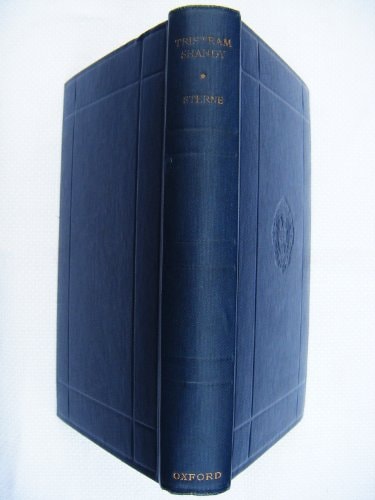
The Life and Opinions of Tristram Shandy, Gentleman
0
0
As an Amazon Associate and affiliate partner, Menrva Books earns from qualifying purchases. Learn more
Author Description
The Life and Opinions of Tristram Shandy, Gentleman (or, more briefly, Tristram Shandy) is a novel by Laurence Sterne. It was published in nine volumes, the first two appearing in 1759, and seven others following over the next 10 years. It was not always held in high esteem by other writers (Samuel Johnson responded that, "Nothing odd can last"), but its bawdy humour was popular with London society, and it has come to be seen as one of the greatest comic novels in English, as well as a forerunner for many modern narrative devices.
Menrva's Summary
THE PULSE
The narrative begins with the protagonist's attempt to chronicle his own life, only to be perpetually derailed by the chaotic and digressive nature of his own consciousness. Tristram Shandy struggles to recount his birth and early years, but the story is constantly interrupted by the eccentric anecdotes of his father, Walter, and his Uncle Toby. The world is defined by the limitations of human communication and the absurdity of 18th-century intellectual pursuits. The narrative framework is famously non-linear, utilizing a stream-of-consciousness style that prioritizes the associative leaps of the narrator over chronological progression.
INSIDE THE PAGES
- Extensive use of metafiction and direct address to the reader
- Frequent digressions that delay the primary plot
- Experimental typography, including black, marbled, and blank pages
- Satire of contemporary philosophical and scientific theories
- Bawdy humor and double entendres
- Character-driven focus on the eccentricities of the Shandy family
- Non-linear temporal structure
- Parody of autobiographical conventions
THE COLLECTIVE ECHO
Discussion often centers on the novel's status as a precursor to postmodern narrative techniques and its radical departure from the structured storytelling of its era. Readers frequently highlight the balance between the dense, intellectual digressions and the sharp, character-based humor that defines the Shandy household. Critics often examine the effectiveness of Sterne's experimental formatting in conveying the chaotic nature of human memory and thought. The work remains a subject of debate regarding its pacing, as the constant interruptions serve both to frustrate and to amuse those engaging with the text. Ultimately, the novel is recognized for its influence on the development of the modern novel and its enduring commitment to subverting literary expectations.
Page Count:
598
Publication Date:
1903-01-01
Publisher:
OXFORD
ISBN-10:
0192500406
ISBN-13:
9780192500403
Humor
Satire
Experimental
classic
18th century
Community Tags
Other Editions(18)
Left of Brain Books
2024
Default edition
True Sign Publishing House Private Limited
2023
CreateSpace Independent Publishing Platform
2018
Independently Published
2018
CreateSpace Independent Publishing Platform
2017

Recorded Books, Inc. and Blackstone Publishing
2016
Visual Editions
2010
OXFORD UNIVERSITY PRESS
2009
Penguin UK
2003
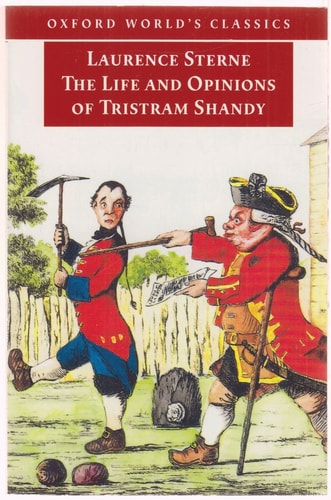
Oxford University Press
1998
Quality Paperback Book Club
1992
Privately printed for members of the Society of English Bibliophilists
1985
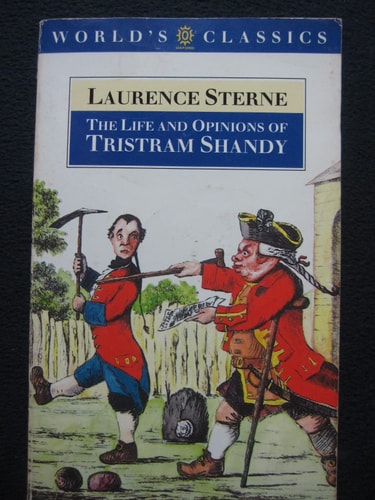
Oxford University Press
1983
Franklin
1983
Folio Society
1970

Penguin Group USA, Incorporated
1962
International Thomson Publishing
1950
OXFORD
1903
Similar Books

Reader Comments
Share Your Thoughts
No comments yet. Be the first to share your thoughts!