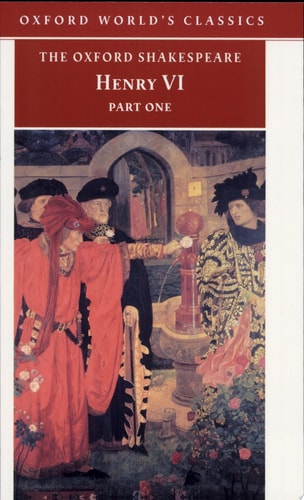
Henry VI, Part One
0
0
As an Amazon Associate and affiliate partner, Menrva Books earns from qualifying purchases. Learn more
Author Description
Henry VI: Part One is a dramatic tale of the lives of soldiers, diplomats, kings, and insurrectionists. It depicts the fractious instability of the court and nobility of fifteenth-century England, and their squabbles with their French counterparts.Despite its debut performance in 1592, however, Henry VI: Part One does not appear in printed form until some thirty years later, in the 1623 folio. There are many questions, therefore, surrounding exactly how many people wrote the play, when they did so, how it was performed, who played what part, and the nature of the manuscript behind the first performance. In his wide-ranging introduction, Michael Taylor offers answers to these questions, and discusses other key issues such as language, structure, performance history, and the role of women in the play. Taylor edits the play for students, scholars, and theater-goers with an informative commentary on all aspects of the language, action, characters, and staging.
Menrva's Summary
THE PULSE
The death of Henry V leaves a power vacuum in England, igniting internal political strife and external conflict with France. As the young King Henry VI ascends the throne, his court is fractured by the competing ambitions of powerful nobles and the loss of English territories in France. The narrative follows the military campaigns of Lord Talbot and the rising influence of figures like Richard Plantagenet, who maneuvers to secure his claim to the throne. The play utilizes a multi-linear structure to track simultaneous events across the English and French battlefields, highlighting the fragility of the state under a weak monarch.
INSIDE THE PAGES
- Historical dramatization of the Hundred Years' War
- Exploration of political factionalism and court intrigue
- Characterization of Joan of Arc as a central antagonist
- Focus on the military exploits of Lord Talbot
- Use of blank verse and prose to distinguish social status
- Themes of national identity and dynastic legitimacy
- Depiction of the loss of French territories
- Early introduction of the conflict between the houses of York and Lancaster
THE COLLECTIVE ECHO
Discussion often centers on the collaborative nature of the text and the debate regarding Shakespeare's specific contributions versus those of his contemporaries. Readers frequently highlight the play's focus on military action and the rapid shifts in political alliances that define the early stages of the Wars of the Roses. Critics often examine the portrayal of Joan of Arc, noting how the text reflects the biases of the period regarding gender and national loyalty. The work is widely recognized for its role in establishing the complex dynastic tensions that drive the subsequent plays in the series.
Page Count:
272
Publication Date:
2004-04-08
Publisher:
Oxford University Press
ISBN-10:
0192804715
ISBN-13:
9780192804716
Drama
History
Plays
Early Modern
Dramatic works
Political