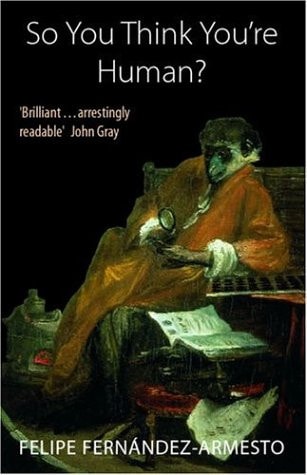
So You Think You're Human: A Brief History of Humankind
0
0
As an Amazon Associate and affiliate partner, Menrva Books earns from qualifying purchases. Learn more
Author Description
You think you're human. But what does that mean? How can humanity be defined? Felipe Fernandez-Armesto takes us on an enlightening journey through the history of humankind to reveal the challenges to our most fundamental belief - that we are, and have always been, human. Chimps and humans are objectively so alike that an anthropologist from Mars might classify them together; advances in artificial intelligence mean that humans no longer have exclusive access to reason, consciousness and imagination; developments in genetics threaten humanity with an uncertain future. The harder we cling to the concept of humanity, the more slippery it becomes. But if it breaks down altogether, what will this mean for human values, human rights, and the defence of human dignity? So You Think You're Human? confronts these problems from a historical perspective, showing how our current understanding of what it means to be human has been shaken by new challenges from science and philosophy. FFA shows how our concept of humankind has changed over time, tracing its faltering expansion to its present limits and arguing that these limits are neither fixed or scientifically verifiable. Controversially, he proposes that we have further to go in developing our concept of humankind and that we need to rethink it as a matter of urgency.
Menrva's Summary
THE THESIS
This book investigates the shifting definition of humanity by questioning whether our traditional understanding of what it means to be human remains valid in the face of modern scientific and philosophical challenges. Felipe Fernández-Armesto, a distinguished historian, utilizes a broad historical framework to analyze how the concept of humankind has evolved from ancient perceptions to contemporary dilemmas. He argues that our current definitions are neither fixed nor scientifically verifiable, suggesting that we must urgently rethink our status as a species.
THE SCOPE MAP
What You Will Find
- Historical analysis of how human identity has been defined across different eras
- Comparative studies between human and primate cognitive capabilities
- Philosophical examination of artificial intelligence and its impact on human uniqueness
- Ethical implications regarding human rights and dignity in a post-humanist context
Scope Limits
- Does not provide a definitive biological classification of humanity
- Avoids technical medical or purely genetic manuals in favor of historical and philosophical discourse
THE AUTHORITY PERSPECTIVE
Readers frequently note the accessible yet intellectually dense nature of the prose, which balances historical breadth with provocative philosophical inquiry. Experts highlight this work as a significant contribution to the ongoing debate regarding the boundaries of human identity in the twenty-first century.
Page Count:
256
Publication Date:
2004-01-01
Publisher:
Oxford University Press
ISBN-10:
0192804170
ISBN-13:
9780192804174
History
Philosophy
Science
Anthropology
Sociology
Civilization
Human beings
Community Tags
Similar Books