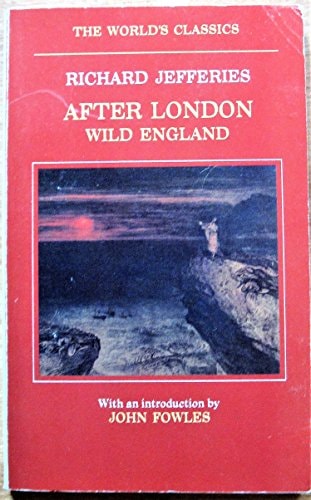
After London or Wild England
0
0
As an Amazon Associate and affiliate partner, Menrva Books earns from qualifying purchases. Learn more
Author Description
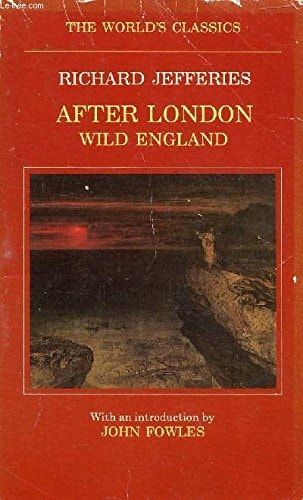
After London (1885) is an extraordinary novel in which Jefferies makes his voyage, through fantasy, away from the corruption and determinism of his age. London has suffocated in noxious filth, and its people relapse into barbarism; Felix (an older Bevis of Jefferies' earlier children's novel) escapes across the lake which has formed over the south of England. Although the centre of social and economic evil has collapsed, the fragmented rural poverty which ensures is no better.John Fowles, in his introduction to this edition, links After London with Butler's Erewhon and Morris's News From Nowhere, and concludes that Jefferies' novel is 'profounder in its implications'. Q. D. Leavis admire its 'instinctive humanity and indignant expression'; Edward Thomas described it as 'a pastoral fluting with grave undertones'; and William Morris commented, 'absurd hopes curled around my heart as I read it'.
Menrva's Summary
THE PULSE
Following a mysterious environmental collapse that renders London a toxic, uninhabitable wasteland, a young man named Felix attempts to navigate a transformed and regressive English landscape. Felix seeks to escape the suffocating decay of the former civilization, embarking on a voyage across a vast lake that has submerged the southern countryside. He faces a world fractured into primitive tribalism, where the remnants of humanity struggle against both the harsh environment and the resurgence of feudal brutality. The narrative employs a detached, observational framework to document the physical and social disintegration of a once-ordered society. Felix must contend with the logical constraints of a post-technological world where survival depends on resourcefulness rather than the inherited structures of the past.
INSIDE THE PAGES
- Detailed descriptions of ecological reclamation and the return of wilderness
- Exploration of societal regression and the loss of historical knowledge
- Focus on the contrast between urban ruin and rural isolation
- Character-driven perspective centered on the protagonist's internal and external migration
- Use of pastoral imagery to frame the collapse of industrial civilization
- Examination of the psychological impact of environmental catastrophe
- Narrative structure that emphasizes the physical geography of a changed England
- Philosophical inquiry into the nature of human progress and corruption
THE COLLECTIVE ECHO
Discussion often centers on the novel's unique position as a precursor to modern post-apocalyptic literature, specifically regarding its focus on environmental decay rather than mere warfare. Readers frequently highlight the stark contrast between the author's vivid, naturalistic descriptions of the landscape and the grim reality of the human survivors. Critics often note the book's ability to maintain a sense of wonder despite the bleak premise, balancing the protagonist's personal growth with a broader critique of Victorian societal values. The work is frequently compared to other utopian and dystopian classics of the era, with many observers noting its profound and unsettling implications for the future of civilization. This synthesis of pastoral beauty and societal collapse remains a primary point of interest for those examining the evolution of speculative fiction.
Page Count:
270
Publication Date:
1982-08-26
Publisher:
Oxford University Press
ISBN-10:
0192812661
ISBN-13:
9780192812667
Dystopian
Science Fiction
Post-Apocalyptic
Pastoral
Classic Literature