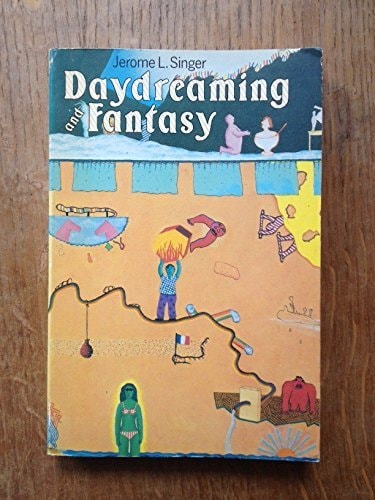
Daydreaming and Fantasy
0
0
As an Amazon Associate and affiliate partner, Menrva Books earns from qualifying purchases. Learn more
Author Description
Daydreaming, our ability to give ‘to airy nothing a local habitation and a name’, remains one of the least understood aspects of human behaviour. As children we explore beyond the boundaries of our experience by projecting ourselves into the mysterious worlds outside our reach. As adolescents and adults we transcend frustration by dreams of achievement or escape, and use daydreaming as a way out of intolerable situations and to help survive boredom, drudgery or routine. In old age we turn back to happier memories as a relief from loneliness or frailty, or wistfully daydream about what we would do if we had our time over again. Why is it that we have the ability to alternate between fantasy and reality? Is it possible to have ambition or the ability to experiment, create or invent without the catalyst of fantasy? Are sexual fantasies an inherent part of human behaviour? Are they universal, healthy, destructive? Is daydreaming itself destructive? Or is it a force which facilitates change and which can even be harnessed to positive advantage? In this provocative book, originally published in 1975, the product of the previous twenty-five years of research, the author debates the nature and function of daydreaming in the light of his own experiments. As well as investigating what is a normal ‘fantasy-life’ and outlining patterns and types of daydreaming, he describes the role of daydreaming in schizophrenia and paranoia, examines the fantasies and hallucinations induced by drugs and also the nature of altered states of consciousness in Zen and Transcendental Meditation. Among the many topics covered, he explains how it is possible to help children enlarge their capacity for fantasy, how adults can make positive use of daydreaming and how people on the verge of disturbed behaviour are often unconscious of their own fantasies. Advances in scientific methods and new experimental techniques had made it possible at this time to monitor both conscious daydreaming and sub-conscious
Menrva's Summary
THE THESIS
What is the psychological function of daydreaming and how does it influence human behavior across the lifespan? Jerome L. Singer, a prominent psychologist, synthesizes twenty-five years of experimental research to argue that fantasy is not merely an escape, but a fundamental cognitive process. He examines how internal imagery serves as a mechanism for emotional regulation, creative problem-solving, and adaptation to reality.
THE SCOPE MAP
What You Will Find
- Analysis of fantasy patterns across childhood, adolescence, and old age
- Examination of the relationship between daydreaming and mental health conditions like schizophrenia
- Investigation into altered states of consciousness, including meditation and drug-induced hallucinations
- Practical applications for enhancing creative capacity and managing daily stress
Scope Limits
- The text reflects the scientific understanding and experimental techniques available as of 1975
- It does not cover modern neuroimaging advancements or digital-age cognitive research
THE AUTHORITY PERSPECTIVE
Experts recognize this work as a foundational text in the study of internal experience and cognitive psychology. Readers frequently note the academic density of the prose, which balances rigorous experimental data with accessible observations on human nature.
Page Count:
288
Publication Date:
1981-10-15
Publisher:
Oxford University Press
ISBN-10:
0192813056
ISBN-13:
9780192813053
Non-Fiction
Psychology
Mental Health
Human behavior
Counseling Psychology
Community Tags
Other Editions(3)
Similar Books






Reader Comments
Share Your Thoughts
No comments yet. Be the first to share your thoughts!