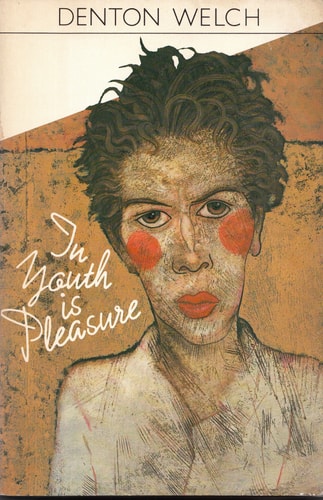
In Youth Is Pleasure
0
0
As an Amazon Associate and affiliate partner, Menrva Books earns from qualifying purchases. Learn more
Author Description
Against the backdrop of an English country hotel in a languid pre-war summer, Denton Welch's alter ego, Orvil Pym, examines his early life and formative experiences with a Proustian intensity. An adolescent voyeur, Orvil takes pleasure in the microscopic observation of his relatives and fellow guests, charting their eccentricities and love affairs as faithfully as he exposes his own obsessions. In a highly perceptive Afterword, Jeremy Reed relates the novel to Welch's life and work, praising it for writing that 'oscillates between moments of lyrical serenity and outbreaks of psychological disorder.' Flagrantly controversial on its first publication in 1945, In Youth Is Pleasure will impress new readers with its arresting visual descriptions and its defiance of convention.
Menrva's Summary
THE PULSE
During a languid pre-war summer at an English country hotel, the adolescent Orvil Pym navigates the complexities of his own burgeoning identity and the eccentricities of those around him. Orvil functions as an observant voyeur, meticulously documenting the behaviors of his relatives and fellow guests while simultaneously grappling with his own internal obsessions. The narrative framework employs a highly introspective, first-person perspective that prioritizes sensory detail and psychological nuance over traditional plot progression. Orvil’s objective is to reconcile his private desires with the rigid social constraints of his environment, often finding himself at odds with the expectations of the adults surrounding him.
INSIDE THE PAGES
- Introspective, first-person narrative voice
- Microscopic observation of social dynamics
- Focus on adolescent voyeurism and self-discovery
- Vivid, sensory-rich descriptive prose
- Exploration of pre-war English social structures
- Non-linear, impressionistic pacing
- Examination of psychological disorder and serenity
- Autobiographical elements reflecting the author's life
THE COLLECTIVE ECHO
Readers and critics frequently highlight the novel's intense focus on visual detail and its unique, impressionistic style. Discussion often centers on the protagonist's detached yet obsessive nature, which serves as a lens for examining the social conventions of the era. Many observers note that the book prioritizes internal psychological development over external action, creating a distinct atmosphere of unease and beauty. The work is often praised for its defiance of traditional narrative structures, making it a significant example of mid-twentieth-century introspective writing. Readers who appreciate character-driven narratives with a strong sense of place will find the prose particularly engaging.
Page Count:
164
Publication Date:
1982-01-01
Publisher:
Oxford Univ Press
ISBN-10:
0192813633
ISBN-13:
9780192813633
Twentieth Century
Autobiographical fiction
British literature
Coming of Age
Subjects
Classic Literature