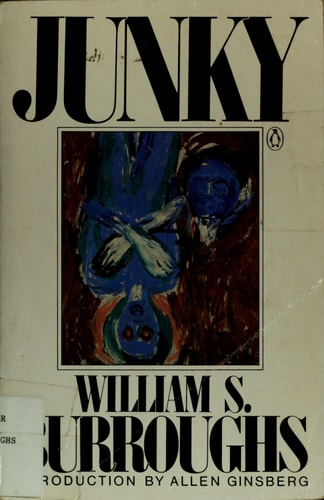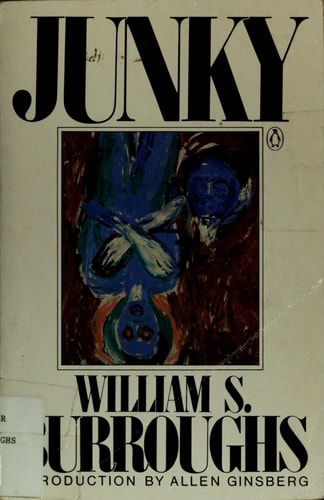
Junky
0
0
As an Amazon Associate and affiliate partner, Menrva Books earns from qualifying purchases. Learn more
Author Description
In this complete and unexpurgated edition of one of the most powerful books about drug addiction, William S. Burroughs depicts the addict's life: his hallucinations, his ghostly nocturnal wanderings, his strange sexuality, and his hunger for the needle. Following its hero from his Midwestern birthplace to New York, New Orleans, and Mexico City, Junky is a memorable and shocking demonstration of the junk equation: "Junk is not, like alcohol or weed, a means to increased enjoyment of life. Junk is not a kick. It is a way of life." -- from the back cover "One of the most compelling and brilliant challenges any contemporary writer has raised against the absurd jurisdiction of death." -- The Washington Post
Menrva's Summary
THE PULSE
A man descends into the relentless cycle of heroin addiction, navigating the criminal underworld while seeking a permanent escape from the constraints of conventional society.
The protagonist, William Lee, chronicles his movement through the urban landscapes of New York, New Orleans, and Mexico City as he attempts to secure his next supply of narcotics. He faces constant opposition from law enforcement, the physical degradation of his own body, and the predatory nature of the drug trade. The narrative framework is presented as a semi-autobiographical account, utilizing a detached, observational tone to document the mechanics of addiction. The world is defined by its scarcity, paranoia, and the constant threat of incarceration or withdrawal.
INSIDE THE PAGES
- First-person narrative perspective
- Episodic structure reflecting the erratic nature of addiction
- Clinical, unvarnished descriptions of drug procurement
- Exploration of the criminal subculture in mid-century America
- Minimalist, direct prose style
- Focus on the psychological and physical effects of heroin
- Social commentary on the legal and moral status of addicts
- Geographic progression from the Midwest to international borders
THE COLLECTIVE ECHO
Readers and critics frequently identify this work as a foundational text of the Beat Generation, noting its stark departure from the romanticized portrayals of substance use common in earlier literature. Discussion often centers on the author's refusal to moralize, choosing instead to present the addict's existence as a logical, albeit destructive, response to societal pressures. Many highlight the effectiveness of the prose in conveying the mundane, repetitive nature of the search for drugs rather than focusing on sensationalism. The work is widely recognized for its influence on counterculture writing and its role in establishing a specific aesthetic of alienation. Readers often note that the narrative's lack of sentimentality provides a clear-eyed view of the physical and social costs of addiction.
Page Count:
176
Publication Date:
1977-03-31
Publisher:
Penguin Books
ISBN-10:
0140043519
ISBN-13:
9780140043518
Classic Literature
Autobiographical fiction
Drug Culture
Classics
Counterculture
Literary