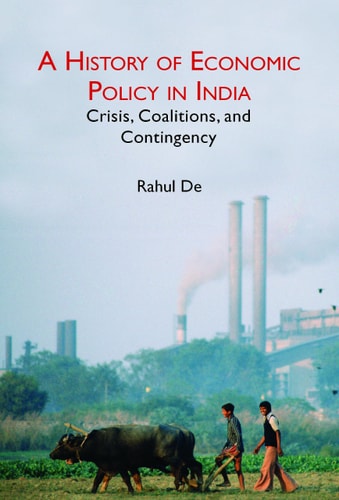
A History of Economic Policy in India: Crisis, Coalitions, and Contingency
0
0
As an Amazon Associate and affiliate partner, Menrva Books earns from qualifying purchases. Learn more
Author Description
Economic Policy in Independent India provides an immersive, accessible yet rigorous understanding of the Indian economy through a political economy analysis of economic policies. It provides a birds-eye view of the politics, context, and ideas that shaped major economic policies in independent India and argues that they are the product of crisis, coalitions, and contingency - not necessarily choice. Each chapter focuses on specific political regimes: Colonial Rule, Jawahar Lal Nehru, Indira Gandhi, liberalisation under coalition governments, the UPA Government, and the NDA Government. The book evaluates how well a government executed its policies based on the economic and political constraints it faced, rather than economic outcomes. Using theories to make sense of the economy, political ideology, historical conditions, and international context, the book's framework provides multiple perspectives and analyses economic policies as an outcome of interactions between dynamics in the economy.
Menrva's Summary
THE THESIS
This book investigates the driving forces behind economic policy decisions in independent India, positing that they are shaped by crisis, coalitions, and contingency rather than deliberate choice. The author, Rahul De', analyzes the political economy of India's economic policies, offering an accessible yet rigorous understanding of the nation's economy. The book examines specific political regimes, from Colonial Rule through the UPA and NDA governments, evaluating policy execution within the economic and political constraints faced by each. It utilizes theories to interpret the interplay of economic dynamics, political ideology, historical conditions, and international context, providing multiple analytical perspectives.
THE SCOPE MAP
- Analysis of economic policies across distinct political regimes: Colonial Rule, Nehruvian era, Indira Gandhi's rule, liberalization under coalition governments, UPA, and NDA.
- Evaluation of policy execution based on economic and political constraints, rather than solely economic outcomes.
- Application of political economy analysis to understand the Indian economy.
- Framework integrating theories to make sense of economic policy as an outcome of interactions between economic dynamics, political ideology, historical conditions, and international context.
THE AUTHORITY PERSPECTIVE
The book frames India's economic policies as products of crisis, coalitions, and contingency, offering a political economy perspective. It evaluates policy execution within the constraints faced by various political regimes, from colonial times to the present. The analysis integrates economic, political, and historical contexts to provide a multi-faceted understanding of policy-making. The framework suggests that understanding these interactions is key to comprehending the trajectory of India's economy.
Page Count:
220
Publication Date:
2024-01-04
Publisher:
Cambridge University Press
ISBN-10:
1009362682
ISBN-13:
9781009362689
History
Economics
Politics
Non-Fiction
Community Tags
Similar Books