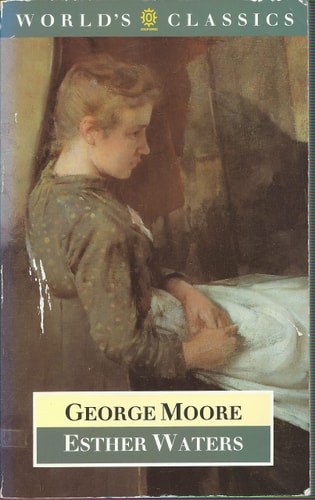
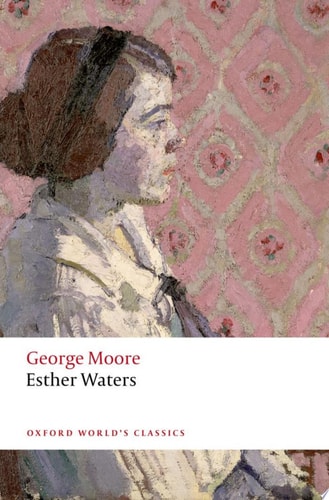
Esther Waters
0
0
As an Amazon Associate and affiliate partner, Menrva Books earns from qualifying purchases. Learn more
Author Description
“She stood on the platform watching the receding train. A few bushes hid the curve of the line; the white vapour rose above them, evaporating in the pale evening. A moment more and the last carriage would pass out of sight. The white gates swung forward slowly and closed over the line”. Thus opens the novel about Esther Waters, young, pious woman from a poor working class family who, while working as a kitchen maid, is seduced by another employee, becomes pregnant, is deserted by her lover, and against all odds decides to raise her child as a single mother. Esther Waters is one of a group of Victorian novels that depict the life of a “fallen woman”. It is considered to be Moore’s best novel. Moore lived from 1852 to 1933.
Menrva's Summary
THE PULSE
After being seduced and abandoned by a fellow employee, a young kitchen maid must navigate the harsh social and economic realities of Victorian England to raise her child alone. Esther Waters, a pious woman from a working-class background, finds her life upended by an unplanned pregnancy that forces her into a precarious existence. She faces systemic prejudice, poverty, and the rigid moral codes of her time while striving to maintain her independence and provide for her son. The narrative utilizes a third-person perspective to document her struggle against the societal structures that seek to marginalize her.
INSIDE THE PAGES
- Detailed depiction of Victorian domestic service hierarchies
- Exploration of the social stigma surrounding unwed motherhood
- Realistic portrayal of working-class economic instability
- Examination of religious influence on personal morality
- Critique of the gambling culture prevalent in late 19th-century England
- Focus on the endurance of maternal devotion
- Naturalistic prose style characteristic of the period
- Chronological narrative progression
THE COLLECTIVE ECHO
Readers and critics frequently highlight the novel's unflinching commitment to realism and its sympathetic portrayal of a marginalized protagonist. Discussion often centers on Moore's ability to capture the granular details of domestic life and the crushing weight of social expectations placed upon women during the Victorian era. Many observers note the effectiveness of the pacing, which mirrors the slow, grinding nature of Esther's daily hardships. The work is widely recognized for its departure from the more sentimental tropes common to its contemporaries, offering instead a stark look at the consequences of class and gender inequality. Readers often find the protagonist's resilience to be the primary anchor of the narrative, providing a compelling study of individual agency within a restrictive environment.
Page Count:
424
Publication Date:
1983-09-01
Publisher:
Oxford University Press
ISBN-10:
0192815784
ISBN-13:
9780192815781
Social Issues
Victorian
Historical
England
Classic Literature
Mothers and sons
Realism
Community Tags
Other Editions(3)
Similar Books