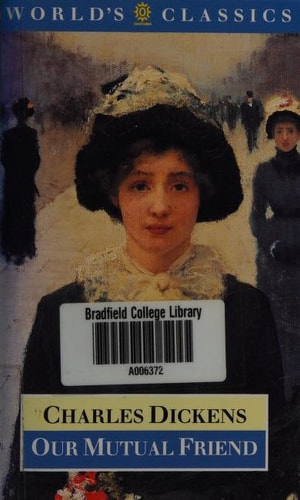
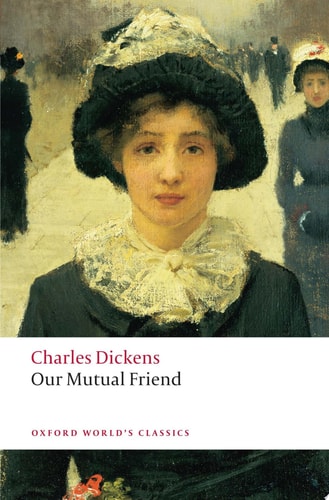
Our Mutual Friend
0
0
As an Amazon Associate and affiliate partner, Menrva Books earns from qualifying purchases. Learn more
Author Description
Dickens's last completed novel, Our Mutual Friend, stands as a monument, rich in imagery and themes, to his abiding, passionate concern with the potential for change and progress at all levels of society.
Menrva's Summary
THE PULSE
The discovery of a body in the Thames triggers a complex web of inheritance, social ambition, and moral reckoning that entangles the lives of the wealthy and the destitute alike. John Harmon, the heir to a vast dust-heap fortune, is presumed dead, setting in motion a series of events that forces characters from disparate social strata to confront their own greed and integrity. The narrative follows the Boffins, the Wilfers, and the mysterious Rokesmith as they navigate the rigid class structures of Victorian London. Dickens employs a multi-perspective framework to expose the corruption inherent in a society obsessed with material wealth. The story operates under the logical constraints of 19th-century legal inheritance laws and the stark physical divide between the river-dwelling poor and the affluent elite.
INSIDE THE PAGES
- Intricate multi-plot structure
- Satirical character archetypes
- Vivid descriptions of the Thames and London dust heaps
- Social commentary on the Victorian class system
- Use of irony to highlight moral hypocrisy
- Symbolism of refuse and waste as societal indicators
- Complex, interconnected character arcs
- Detailed exploration of Victorian legal and financial institutions
THE COLLECTIVE ECHO
Readers and critics frequently highlight the novel's dense, atmospheric portrayal of London as a central character in its own right. Discussion often centers on the effectiveness of Dickens's satire regarding the obsession with money and the social mobility of the era. Many observers note the intricate plotting, which balances a large cast of characters across various social tiers with precision. The pacing is often described as deliberate, allowing for deep character development that contrasts sharply with the more action-oriented segments of the mystery. Scholars frequently point to this work as a mature reflection on the moral decay of industrial society.
Page Count:
880
Publication Date:
1990-01-11
Publisher:
Oxford University Press
ISBN-10:
0192817957
ISBN-13:
9780192817952
Mystery
Classic Literature
England
London England
Realism
Social Satire
Victorian
Community Tags
Other Editions(4)
Similar Books