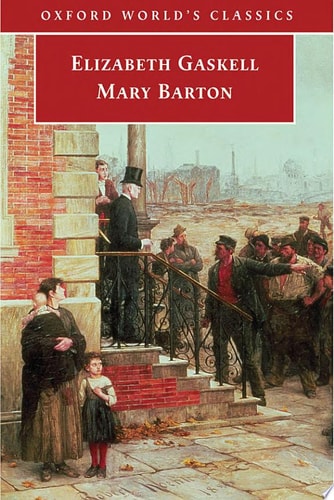
Mary Barton
0
0
As an Amazon Associate and affiliate partner, Menrva Books earns from qualifying purchases. Learn more
Author Description
'It's the masters as has wrought this woe; it's the masters as should pay for it.' Set in Manchester in the 1840s - a period of industrial unrest and extreme deprivation - Mary Barton depicts the effects of economic and physical hardship upon the city's working-class community. Paralleling the novel's treatment of the relationship between masters and men, the suffering of the poor, and the workmen's angry response, is the story of Mary herself: a factory-worker's daughter who attracts the attentions of the mill-owner's son, she becomes caught up in the violence of class conflict when a brutal murder forces her to confront her true feelings and allegiances. Mary Barton was praised by contemporary critics for its vivid realism, its convincing characters and its deep sympathy with the poor, and it still has the power to engage and move readers today. This edition reproduces the last edition of the novel supervised by Elizabeth Gaskell and includes her husband's two lectures on the Lancashire dialect. ABOUT THE SERIES: For over 100 years Oxford World's Classics has made available the widest range of literature from around the globe. Each affordable volume reflects Oxford's commitment to scholarship, providing the most accurate text plus a wealth of other valuable features, including expert introductions by leading authorities, helpful notes to clarify the text, up-to-date bibliographies for further study, and much more.
Menrva's Summary
THE PULSE
A young woman finds her personal desires and family loyalties fractured by the violent escalation of class warfare in 1840s Manchester. Mary Barton, the daughter of a struggling factory worker, navigates the precarious social landscape of an industrial city defined by extreme poverty and labor unrest. As she becomes the object of affection for a wealthy mill-owner's son, she is thrust into a conflict between her working-class roots and the promise of a different life. The narrative follows her internal struggle as a murder investigation forces her to choose between protecting her father and acknowledging the truth about her community's radicalized actions. The story utilizes a third-person omniscient perspective to examine the systemic pressures exerted on the urban poor.
INSIDE THE PAGES
- Detailed depiction of 1840s Manchester industrial conditions
- Exploration of the divide between mill owners and laborers
- Use of Lancashire dialect to establish regional authenticity
- Focus on the moral consequences of class-based violence
- Examination of the role of women in Victorian working-class families
- Integration of social commentary within a domestic plot
- Character-driven narrative centered on personal growth and realization
- Inclusion of historical context regarding labor movements and trade unions
THE COLLECTIVE ECHO
Readers and critics frequently highlight the novel's commitment to social realism and its empathetic portrayal of the working class during the Industrial Revolution. Discussion often centers on the balance Gaskell maintains between the personal narrative of Mary and the broader political implications of the labor unrest. Many observers note that the prose effectively captures the atmosphere of deprivation and the psychological toll of economic instability. The inclusion of regional dialect is often cited as a significant feature that grounds the story in its specific geographic and temporal setting. Readers appreciate the nuanced character development that prevents the story from becoming a mere political tract, ensuring the human elements remain at the forefront of the experience.
Page Count:
479
Publication Date:
2008-01-01
Publisher:
OUP Oxford
ISBN-10:
0191579084
ISBN-13:
9780191579080
English & College Success
England
Classic Literature
English
Historical
Social Realism
Fathers and daughters
Victorian
Industrial
Fiction political
Community Tags
Other Editions(4)

Similar Books







Reader Comments
Share Your Thoughts
No comments yet. Be the first to share your thoughts!