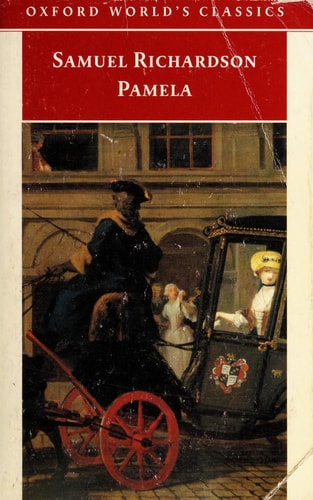
Pamela
0
0
As an Amazon Associate and affiliate partner, Menrva Books earns from qualifying purchases. Learn more
Author Description
One of the most spectacular successes of the flourishing literary marketplace of eighteenth-century London, Pamela also marked a defining moment in the emergence of the modern novel. In the words of one contemporary, it divided the world "into two different Parties, Pamelists and Anti-pamelists," even eclipsing the sensational factional politics of the day. Preached for its morality, and denounced as pornography in disguise, it vividly describes a young servant's long resistance to the attempts of her predatory master to seduce her. Written in the voice of its low-born heroine, Pamela is not only a work of pioneering psychological complexity, but also a compelling and provocative study of power and its abuse.Based on the original text of 1740, from which Richardson later retreated in a series of defensive revisions, this edition makes available the version of Pamela that aroused such widespread controversy on its first appearance.
Menrva's Summary
THE PULSE
A young servant girl faces a relentless campaign of manipulation and attempted seduction by her wealthy, predatory employer. Pamela Andrews, a maidservant in a grand household, finds herself the object of her master's unwanted advances following the death of his mother. She must navigate a precarious social hierarchy, using her wits and moral resolve to maintain her autonomy against a man who views her as his property. The narrative unfolds through an epistolary framework, consisting of letters written by Pamela to her parents, which provides an intimate look at her internal struggle and the escalating power dynamics within the estate.
INSIDE THE PAGES
- Epistolary narrative structure composed of personal letters
- Exploration of class dynamics and social mobility in eighteenth-century England
- Detailed psychological characterization of the protagonist
- Examination of the power imbalance between employer and employee
- Use of moralistic rhetoric to justify or condemn actions
- First-person perspective providing immediate access to the protagonist's fears
- Focus on the domestic sphere as a site of conflict
- Inclusion of original 1740 text reflecting the initial, controversial version
THE COLLECTIVE ECHO
Discussion often centers on the polarizing nature of the protagonist's motivations and the author's intent regarding moral instruction. Readers frequently highlight the tension between the book's reputation as a virtuous text and the explicit nature of the master's predatory behavior. Critics often analyze the work as a foundational piece of the modern novel, noting its influence on the development of psychological realism. The pacing is noted for its slow, methodical build, which mirrors the protagonist's long-term resistance to her master's schemes. Many readers find the epistolary format effective for establishing a sense of urgency and vulnerability throughout the narrative.
Page Count:
592
Publication Date:
2001-01-01
Publisher:
Putnam Publishing Group
ISBN-10:
0192829602
ISBN-13:
9780192829603
England
Epistolary
classic
Social Commentary
Fiction psychological
Historical
Community Tags
Similar Books