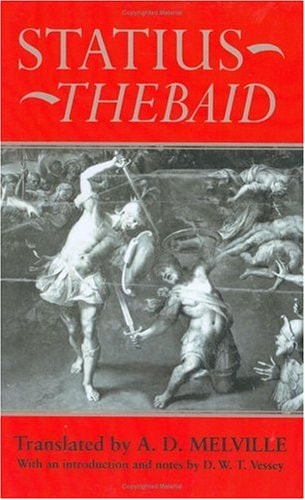
Thebaid
0
0
As an Amazon Associate and affiliate partner, Menrva Books earns from qualifying purchases. Learn more
Author Description
The Thebaid of Publius Papinas Statius, an epic poem in twelve books completed in about A.D. 90, has been thought by many to stand second only to Virgil's Aeneid among Latin narrative poems. It tells of the war between Eteocles and Polynices, sons of Oedipus, for the throne of Thebes. Rich in incident and always dramatic in tone, it unfolds a panorama of human ambition and violence, triumph and catastrophe. Though remaining within the Homeric and Virgilian tradition, it achieves its own power and vitality in thought, language, and description. This new translation captures all power of the Latin original, demonstrating that the Thebaid is not only a masterpiece of poetry but a compelling story, at times horrifying, noble, and pathetic, of humankind bound by the power of Fate.
Menrva's Summary
THE PULSE
The epic poem chronicles the fratricidal conflict between Eteocles and Polynices as they battle for control of the Theban throne. The narrative follows the sons of Oedipus as they navigate the catastrophic consequences of their father's curse, drawing in gods and mortals alike into a cycle of violence. The work is structured into twelve books, utilizing the conventions of classical epic poetry to explore the limits of human ambition and the inexorable weight of fate. The text maintains a dramatic tone, focusing on the psychological and physical toll of civil war within the framework of ancient Greek mythology.
INSIDE THE PAGES
- Twelve-book epic structure
- Focus on the Oedipus myth cycle
- Integration of divine intervention and human agency
- Dramatic, high-stakes narrative tone
- Exploration of dynastic ambition and civil strife
- Detailed descriptions of battle and catastrophe
- Adherence to Homeric and Virgilian stylistic traditions
- Emphasis on the role of Fate in human affairs
THE COLLECTIVE ECHO
Discussion often centers on the poem's position within the Latin canon, frequently comparing its intensity to the works of Virgil. Readers highlight the vivid, often visceral descriptions of violence that define the conflict between the two brothers. Critics observe that the work successfully balances traditional epic tropes with a distinct, darker exploration of human morality and suffering. Many readers appreciate the translation's ability to maintain the rhythmic and linguistic vitality of the original Latin text. The poem remains a subject of study for its complex characterizations and its grim portrayal of the consequences of power.
Page Count:
373
Publication Date:
1995-06-08
Publisher:
Oxford University Press
ISBN-10:
0192824538
ISBN-13:
9780192824530
Mythology
Ancient History
Latin
Epic Poetry
Classical
Community Tags
Similar Books