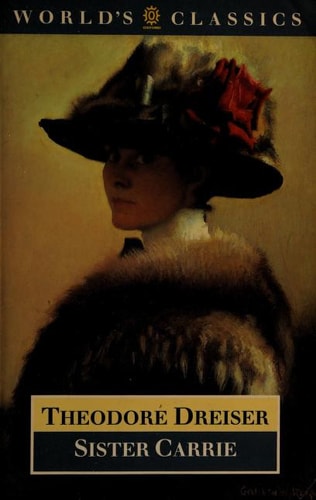
Sister Carrie
0
0
As an Amazon Associate and affiliate partner, Menrva Books earns from qualifying purchases. Learn more
Author Description
A source of inspiration to writers from William Faulkner to Saul Bellow and Joyce Carol Oates, Dreiser's remarkable first novel is an eminently American roller-coaster of rapidly rising and falling fortunes. Banned after its initial publication in 1900, its realist narrative counterplays the story of a young woman seduced by the modern city with that of the middle-aged man who enslaves himself with his love for her. This is the only paperback version using the text widely regarded by scholars as Dreiser's final version.
Menrva's Summary
THE PULSE
Carrie Meeber arrives in Chicago with dreams of success, only to find herself caught in a cycle of moral and social instability as she navigates the harsh realities of urban life. Driven by a desire for material comfort and social mobility, Carrie transitions from a factory worker to a stage performer, while her life becomes inextricably linked with George Hurstwood, a man whose obsession with her leads to his own social and financial ruin. The narrative employs a third-person omniscient perspective to examine the deterministic forces of the city and the shifting nature of human desire. The world is defined by the rigid class structures of the turn-of-the-century United States, where economic survival often dictates personal morality.
INSIDE THE PAGES
- Detailed depiction of late 19th-century urban environments
- Exploration of naturalistic determinism and human agency
- Contrast between the rising fortunes of the protagonist and the decline of her companion
- Critique of the American Dream and consumer culture
- Focus on the psychological impact of poverty and wealth
- Use of realistic dialogue and social observation
- Examination of gender roles and social mobility
- Non-judgmental portrayal of moral ambiguity
THE COLLECTIVE ECHO
Discussion often centers on the novel's role as a foundational text in American literary realism and its unflinching look at the indifference of the city toward individual struggle. Readers frequently highlight the stark contrast between Carrie's pragmatic ascent and Hurstwood's tragic descent, noting how the author avoids moralizing their choices. Critics often point to the prose as being dense and observational, reflecting the author's commitment to documenting the social pressures of the era. The work remains a subject of study for its early exploration of consumerism and the psychological toll of urban isolation. Many readers find the pacing deliberate, emphasizing the slow erosion of character stability over time.
Page Count:
512
Publication Date:
1991-04-25
Publisher:
Oxford University Press
ISBN-10:
0192827421
ISBN-13:
9780192827425
New York
Fiction psychological
Social Commentary
American
Realist
Naturalist
classic
Young women
Community Tags
Other Editions(24)
Creative Media Partners, LLC
2025
Default edition
Mint Editions
2022

Amazon Digital Services LLC - KDP Print US
2021

West Margin Press
2021

CreateSpace Independent Publishing Platform
2018

CreateSpace Independent Publishing Platform
2018

CreateSpace Independent Publishing Platform
2018

CreateSpace Independent Publishing Platform
2018

CreateSpace Independent Publishing Platform
2018

CreateSpace Independent Publishing Platform
2017

Independently Published
2017

Lulu Press, Inc.
2014

Lulu Press, Inc.
2013

Dover Publications, Incorporated
2012
Empire Books
2012
Oxford University Press
2009

Penguin USA, Inc.
2009
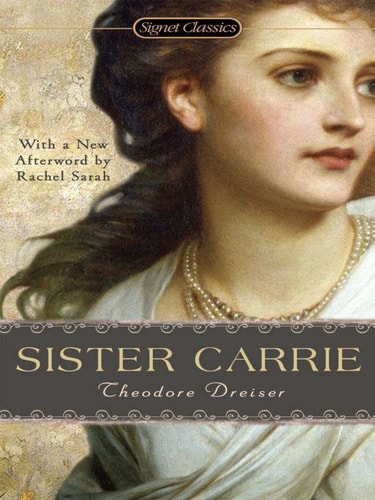
Signet Classics
2009

Penguin Publishing Group
2009

NuVision Publications
2004

IndyPublish.com
2002
Oxford University Press
1991
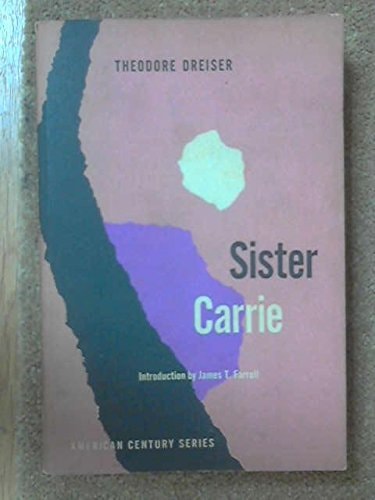
Harcourt College Pub
1957

Perma-Bound Books
1900







Reader Comments
Share Your Thoughts
No comments yet. Be the first to share your thoughts!