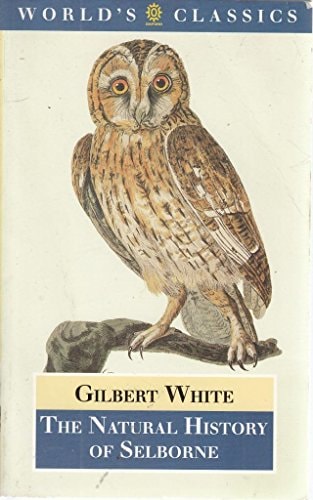
The Natural History of Selborne
0
0
As an Amazon Associate and affiliate partner, Menrva Books earns from qualifying purchases. Learn more
Author Description
The Natural History of Selborne (1789) is the distillation of a lifetime of observing nature, and ranges far beyond White's immediate neighborhood noted in the title. Written during a turbulent time in world history, it is a celebration of the endeavors of both human beings and animals to survive. White's main aims were to induce readers to pay more attention to the wonders around them, and to advance their knowledge of the variety of life: his success has made this book a classic, and has made his name one of the most revered among British naturalists.
Menrva's Summary
THE THESIS
How does the meticulous observation of a singular, local environment contribute to a broader understanding of the natural world? Gilbert White, an 18th-century English clergyman and naturalist, utilizes his lifelong residency in the village of Selborne to document the seasonal behaviors, migration patterns, and biological diversity of his surroundings. His work argues that sustained, localized observation is the foundation of scientific inquiry and a necessary practice for appreciating the complexity of life.
THE SCOPE MAP
What You Will Find
- Detailed observations of avian migration and nesting habits
- Records of local flora and fauna seasonal changes
- Epistolary format documenting correspondence with fellow naturalists
- Observations on the intersection of human activity and local wildlife
Scope Limits
- The text does not provide a comprehensive global biological survey
- It lacks modern taxonomic classification systems developed after the 18th century
THE AUTHORITY PERSPECTIVE
Experts recognize this work as a foundational text in the field of natural history and a precursor to modern ecological writing. Readers frequently note the accessible, observational prose style that remains relevant for its detailed documentation of 18th-century English rural life.
Page Count:
352
Publication Date:
1994-01-06
Publisher:
Oxford University Press
ISBN-10:
0192829289
ISBN-13:
9780192829283
Nature
Science
Non-Fiction
Natural History
Essays
British literature
Natural history
Community Tags
Other Editions(29)
Creative Media Partners, LLC
2018
Default edition
CreateSpace Independent Publishing Platform
2018
CreateSpace Independent Publishing Platform
2017
CreateSpace Independent Publishing Platform
2017
Createspace Independent Publishing Platform
2017
CreateSpace Independent Publishing Platform
2017
Creative Media Partners, LLC
2016
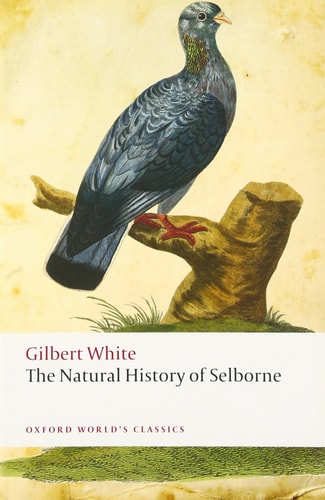
Oxford University Press
2016
CreateSpace Independent Publishing Platform
2015
Creative Media Partners, LLC
2015
Creative Media Partners, LLC
2015
Creative Media Partners, LLC
2015
CreateSpace Independent Publishing Platform
2015
Unicorn Publishing Group
2015
Repressed Publishing LLC
2014
Bod Third Party Titles
2013
Oup Oxford
2013
OUP Oxford
2013
CreateSpace Independent Publishing Platform
2012
IndyPublish.com
2008

Echo Library
2007
Adegi Graphics LLC
1999
Wordsworth Editions
1996
Oxford University Press
1994
Penguin Books
1986

J. Lane
1984
Gresham
1979
Doubleday Dolphin Book
1976
Brian Westland
1789
Similar Books




Reader Comments
Share Your Thoughts
No comments yet. Be the first to share your thoughts!