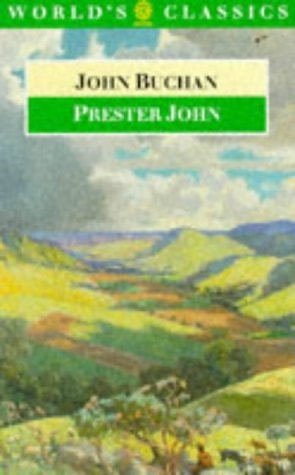
Prester John
0
0
As an Amazon Associate and affiliate partner, Menrva Books earns from qualifying purchases. Learn more
Author Description
Nineteen-year-old David Crawfurd travels from Scotland to South Africa to work as a storekeeper. On the voyage he encounters again John Laputa, the celebrated Zulu minister, of whom he has strange memories. In his remote store David finds himself with the key to a massive uprising led by the minister, who has taken the title of the mythical priest-king, Prester John. David's courage and his understanding of this man take him to the heart of the uprising, a secret cave in the Rooirand. John Buchan wrote Prester John, his sixth novel, in 1910, seven years after he returned from South Africa. It was his first to reach a wide readership across the world, and it established him as the writer of the fast-paced adventures for which he is famous.
Menrva's Summary
THE PULSE
A young Scottish storekeeper in South Africa discovers he holds the critical intelligence needed to thwart a massive uprising led by a charismatic Zulu leader claiming the mantle of a mythical king. David Crawfurd, a nineteen-year-old immigrant, seeks a quiet life as a storekeeper but finds his path intercepted by John Laputa, a magnetic minister with grand ambitions to unite the tribes of Africa. As Laputa orchestrates a rebellion under the guise of the legendary Prester John, David must navigate the physical dangers of the South African landscape and the moral complexities of his own role in the conflict. The narrative is presented through a first-person perspective, detailing David's transition from an observer to a central participant in the unfolding political and military crisis.
INSIDE THE PAGES
- First-person retrospective narration
- Colonial South African setting
- Exploration of the 'white savior' trope common to early 20th-century adventure literature
- Focus on the tension between indigenous leadership and colonial administration
- Use of the 'mythical king' archetype to drive political mobilization
- Pacing characterized by rapid shifts between isolation and high-stakes confrontation
- Detailed descriptions of the rugged Rooirand terrain
- Themes of personal courage and cultural misunderstanding
THE COLLECTIVE ECHO
Discussion often centers on the book's status as a foundational text for the 20th-century adventure genre. Readers frequently highlight the contrast between the fast-paced plot and the dated, colonialist attitudes prevalent throughout the narrative. Critics often examine how Buchan utilizes the myth of Prester John to frame the political anxieties of the British Empire during the early 1900s. While many appreciate the atmospheric world-building and the intensity of the central conflict, others note that the characterization of the antagonist reflects the racial biases of the era. The work remains a subject of study for those interested in the evolution of the adventure novel and the historical context of imperial literature.
Page Count:
256
Publication Date:
1994-08-18
Publisher:
Oxford University Press
ISBN-10:
019282936X
ISBN-13:
9780192829368
Adventure
Action
Historical
Colonial
Clergy
classic
South Africa