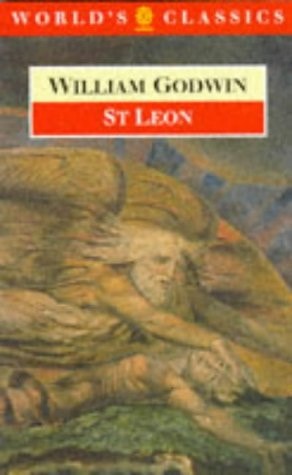
St. Leon
0
0
As an Amazon Associate and affiliate partner, Menrva Books earns from qualifying purchases. Learn more
Author Description
St. Leon, William Godwin's second novel, is a work of challenging ambition. Set during the Protestant Reformation, it tells the harrowing tale of an exiled French aristocrat who is given the secrets of the philosopher's stone and the elixer of life. His attempts to use these gifts to benefit humanity lead only to disaster, plunging him into self-destructive isoloation and arousing fascination, suspicion, and social unrest wherever he goes. It is a tale of obsession and spiralling pursuit, emphasizing the individual's powerlessness in the face of momentous historical change.
Menrva's Summary
THE PULSE
An exiled French aristocrat receives the secrets of the philosopher's stone and the elixir of life, only to find that these gifts catalyze his personal and social ruin. Reginald St. Leon, the protagonist, seeks to restore his family's lost fortune and status, but his acquisition of alchemical power forces him into a cycle of flight and concealment. He faces opposition from both the suspicious public and his own internal moral decay as he navigates the political volatility of the Protestant Reformation. The narrative unfolds through a first-person perspective, documenting the protagonist's descent into isolation as he attempts to wield supernatural longevity and wealth. The world is defined by the rigid social hierarchies of the sixteenth century and the encroaching threat of religious and political persecution.
INSIDE THE PAGES
- First-person confessional narrative structure
- Exploration of the ethics of immortality
- Historical setting during the Protestant Reformation
- Themes of domestic duty versus individual ambition
- Psychological depiction of paranoia and social alienation
- Integration of alchemical and occult motifs
- Critique of aristocratic values and social structures
- Focus on the consequences of unchecked power
THE COLLECTIVE ECHO
Discussion often centers on the novel's role as a significant contribution to the Gothic tradition, particularly in its focus on the psychological toll of isolation. Readers frequently highlight the tension between St. Leon's desire for familial stability and the destructive nature of his secret knowledge. Critics often examine how Godwin uses the protagonist's plight to comment on the political anxieties of the late eighteenth century. The pacing is noted for its deliberate, often somber progression, which mirrors the protagonist's spiraling descent into misery. Many readers appreciate the philosophical depth, though some find the narrative's focus on internal monologue to be dense and demanding.
Page Count:
528
Publication Date:
1994-06-23
Publisher:
Oxford University Press
ISBN-10:
0192828339
ISBN-13:
9780192828330
Gothic
classic
France fiction
Philosophical
Historical
18th century
Community Tags
Similar Books