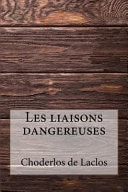
Les Liaisons Dangereuses
0
0
As an Amazon Associate and affiliate partner, Menrva Books earns from qualifying purchases. Learn more
Author Description
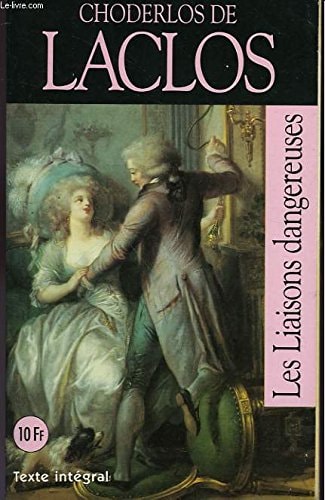
The complex moral ambiguities of seduction and revenge make Les Liaisons dangereuses (1782) one of the most scandalous and controversial novels in European literature. Its prime movers, the Vicomte de Valmont and the Marquise de Merteuil--gifted, wealth, and bored--form an unholy alliance and turn seduction into a game. And they play this game with such wit and style that it is impossible not to admire them, until they discover mysterious rules that they cannot understand. In the ensuing battle there can be no winners, and the innocent suffer with the guilty.This new translation gives Laclos a modern voice, and readers will be able to judge whether the novel is as "diabolical" and "infamous" as its critics have claimed, or whether it has much to tell us about a world we still inhabit.
Menrva's Summary
THE PULSE
The Vicomte de Valmont and the Marquise de Merteuil initiate a calculated campaign of seduction and manipulation that spirals into a destructive game of revenge. Driven by boredom and a desire for social dominance, these two aristocrats orchestrate the downfall of those around them through elaborate schemes. Their objective is to maintain control over their social sphere while testing the limits of their own influence. The narrative is presented entirely through an epistolary framework, utilizing letters exchanged between the characters to reveal their hidden motives and evolving strategies.
INSIDE THE PAGES
- Epistolary structure consisting of letters written by various characters
- Exploration of 18th-century French aristocratic social codes
- Dual-protagonist perspective focusing on the Vicomte de Valmont and the Marquise de Merteuil
- Themes of moral corruption and the objectification of individuals
- Use of irony and wit to mask malicious intent
- Gradual shift from calculated games to genuine emotional vulnerability
- Contrast between public reputation and private conduct
- Examination of the power dynamics between men and women in a rigid society
THE COLLECTIVE ECHO
Discussion often centers on the chilling detachment of the protagonists and the effectiveness of the epistolary format in building suspense. Readers frequently highlight the contrast between the characters' sophisticated wit and the devastating consequences of their actions. Critics often debate whether the novel serves as a moral warning or a cynical celebration of aristocratic decadence. The pacing is noted for its slow, methodical buildup that mirrors the careful planning of the central characters. Many readers find the psychological depth of the antagonists to be the primary draw, as the book forces an examination of the thin line between social performance and authentic human connection.
Page Count:
448
Publication Date:
1995-06-29
Publisher:
Oxford University Press
ISBN-10:
0192829211
ISBN-13:
9780192829214
Romance
Satire
Historical
Epistolary
classic
French literature
France fiction