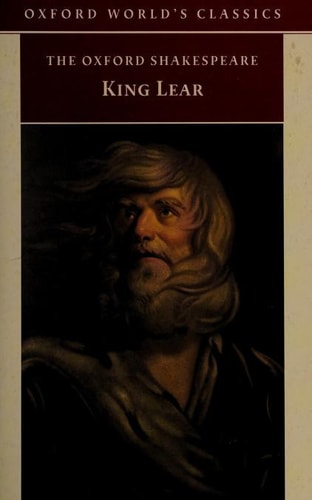
The History of King Lear (Oxford World's Classics)
0
0
As an Amazon Associate and affiliate partner, Menrva Books earns from qualifying purchases. Learn more
Author Description
King Lear, widely considered Shakespeare's most deeply moving, passionately expressed, and intellectually ambitious play, has almost always been edited from the revised version printed in the First Folio of 1623, with additions from the quarto of 1608. Now for the first time, this new volume presents the full, scholarly edition to be based firmly on the quarto, now recognized as the base text from which all others derive. A thorough, attractively written introduction suggests how the work grew slowly in Shakespeare's imagination, fed by years of reading, thinking, and experience as a practical dramatist.This editition consists of a new, modern-spelling text; a full index to the introduction and commentary; production photographs and related art. The on-page commentary and detailed notes to this edition offer critical help in understanding the language and dramaturgy in relation to the theaters in which King Lear was first performed. Additional sections reprint the early ballad, which was among the play's earliest sources, and provide additional guides to understanding and appreciating one of the greatest masterworks of Western civilization.
Menrva's Summary
THE PULSE
An aging monarch’s decision to divide his kingdom among his three daughters triggers a catastrophic descent into madness, betrayal, and political collapse. The protagonist, King Lear, seeks to relinquish his responsibilities while retaining the status of a king, a desire that clashes with the cold pragmatism of his elder daughters and the moral integrity of his youngest. His objective is to secure comfort and loyalty in his twilight years, but he is opposed by the forces of ambition, filial ingratitude, and the harsh, indifferent nature of the world he inhabits. The narrative is presented as a dramatic script, utilizing soliloquies and dialogue to reveal the internal psychological disintegration of the characters as they navigate a landscape defined by power struggles and moral decay.
INSIDE THE PAGES
- Exploration of the consequences of vanity and poor judgment
- Examination of the breakdown of familial and social hierarchies
- Use of the storm as a metaphor for internal psychological turmoil
- Contrast between the madness of the king and the wisdom of the fool
- Analysis of the quarto text as the primary source material
- Inclusion of historical context regarding early modern theater practices
- Integration of scholarly commentary on language and dramaturgy
- Presentation of source materials such as the early ballad
THE COLLECTIVE ECHO
Discussion often centers on the structural differences between the quarto and folio versions of the play, which significantly alter the interpretation of Lear’s character arc. Readers frequently highlight the stark, bleak atmosphere of the work, noting how the absence of traditional poetic justice creates a profound sense of existential dread. Critics often examine the play's focus on the fragility of human reason when stripped of status and authority. The text is widely analyzed for its complex exploration of sight and blindness, both literal and metaphorical, which serves as a central thematic anchor throughout the narrative. Scholars and students alike value this edition for its rigorous attention to the textual history and its practical insights into the performance conditions of the period.
Page Count:
336
Publication Date:
2001-04-12
Publisher:
Oxford University Press
ISBN-10:
0192839926
ISBN-13:
9780192839923
Drama
Plays
Tragedy
Shakespeare
Dramatic works
Classic Literature
Community Tags
Similar Books