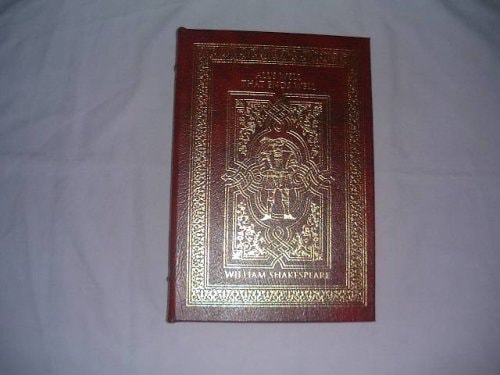
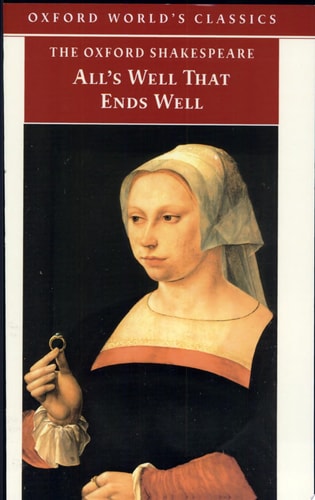
All's Well That Ends Well
0
0
As an Amazon Associate and affiliate partner, Menrva Books earns from qualifying purchases. Learn more
Author Description
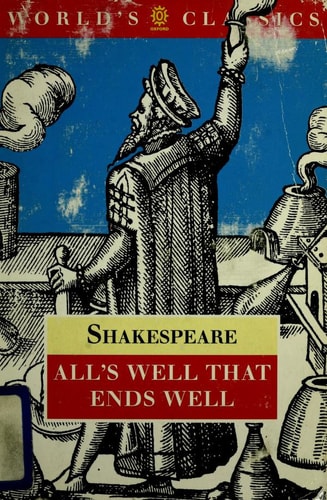
All's Well that Ends Well receives, in this new edition, the full reconsideration for which it is overdue. After a long theatrical and critical history marked by avoidance and simplification, the play's dislocations of desire and clashing ideologies of class and gender are made newlyaccessible to readers, performers, and audiences. All's Well that Ends Well found little favor in the infrequent productions of earlier centuries, and was drastically reshaped by Garrick toward farce and by Kemble toward purity and pathos. But artists of recent decades such as Guthrie, Moshinsky,and Nunn have used the very discords of style and genre once seen as defects as sources of theatrical power and complexity, just as critics from various perspectives--feminist, sociological, generic, psychological--have found new value and pertinence in a play that is itself a deconstructed fairytale. Susan Snyder's Introduction makes a distinguished contribution to criticism of the play, and the edition, offering freshly considered text, is fully and helpfully annotated.
Menrva's Summary
THE PULSE
Helena, a physician's daughter, pursues the aristocratic Bertram in a complex social and romantic entanglement that forces them to confront their conflicting desires. Helena seeks to win Bertram's hand through her medical skill and unwavering devotion, despite his disdain for her lower social standing. The narrative follows a non-linear progression of courtly intrigue and deception, testing the boundaries of class, gender, and personal agency. The play utilizes a blend of romantic comedy and darker, cynical undertones to challenge the traditional structure of a fairy tale ending.
INSIDE THE PAGES
- Exploration of the conflict between merit and noble birth
- Use of the 'bed trick' as a central plot device
- Examination of gender dynamics and female autonomy
- Juxtaposition of cynical realism and idealized romance
- Complex characterization of the protagonist Helena
- Satirical portrayal of the braggart soldier Parolles
- Shifts between courtly settings and military campaigns
- Deconstruction of traditional comedic tropes
THE COLLECTIVE ECHO
Discussion often centers on the play's tonal shifts and the ambiguous nature of its resolution. Readers frequently highlight the difficulty of reconciling Helena's intelligence with her desperate pursuit of an unlikable partner. Critics often analyze the work as a problem play, noting how it resists simple categorization within the Shakespearean canon. Modern interpretations focus on the text's exploration of power imbalances and the social pressures that dictate human relationships. The play remains a subject of intense academic debate regarding its moral implications and theatrical effectiveness.
Page Count:
256
Publication Date:
1993-01-01
Publisher:
Oxford University Press
ISBN-10:
0198129319
ISBN-13:
9780198129318
Drama
Classic Literature
Shakespeare
Dramatic works
Plays
Comedy
Community Tags
Other Editions(4)

Similar Books