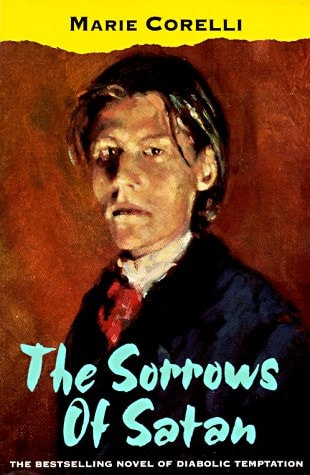
The Sorrows of Satan: Or the Strange Experience of One Geoffrey Tempest, Millionaire
0
0
As an Amazon Associate and affiliate partner, Menrva Books earns from qualifying purchases. Learn more
Author Description
The Sorrows of Satan was one of the first modern bestsellers and was influential in establishing some of the major trends in twentieth-century bestselling fiction.The setting is London, 1895, and the Devil is on the loose. He is searching for someone morally strong enough to resist temptation, but there seems little chance he will succeed. Britain is all but totally corrupt. The aristocracy is financially and spiritually bankrupt; church leaders no longer believe in God; Victorian idealism has been banished from literature and life; and sexual morality is being undermined by the pernicious doctrines of the "New Woman." Everything and everyone is up for sale, and it takes a special kind of moral courage to resist the Devil's seductions.
Menrva's Summary
THE PULSE
A struggling writer finds his life transformed when he encounters a mysterious, wealthy benefactor who may be the Devil himself. Geoffrey Tempest, a destitute author, suddenly inherits a vast fortune and enters the upper echelons of London society under the guidance of the enigmatic Prince Lucio Rimânez. As Tempest navigates a world of decadence and moral decay, he must determine if his newfound success is a blessing or a trap designed to test his soul. The narrative unfolds through a first-person perspective, documenting the protagonist's descent into the hollow luxuries of the Victorian elite while facing the subtle, manipulative influence of his companion.
INSIDE THE PAGES
- Exploration of moral corruption within the aristocracy
- Critique of late Victorian societal values
- Personification of the Devil as a sophisticated socialite
- Examination of the relationship between wealth and spiritual integrity
- Satirical commentary on the literary industry of the 1890s
- Gothic atmosphere set against the backdrop of London
- Philosophical debates regarding free will and temptation
- Use of melodrama to heighten the stakes of the protagonist's choices
THE COLLECTIVE ECHO
Discussion often centers on the book's status as a foundational text for the modern bestseller, noting its blend of moral didacticism and sensationalist plot elements. Readers frequently highlight the author's sharp, polemical tone, which targets the perceived spiritual bankruptcy of the late nineteenth century. Critics often examine how the work reflects the anxieties of the era, particularly regarding the shifting roles of women and the decline of traditional religious authority. The pacing is noted for its dramatic intensity, which keeps the focus firmly on the protagonist's internal struggle against the seductive nature of his benefactor. Many readers appreciate the work for its historical significance as a bridge between Victorian moralizing and the commercial fiction of the twentieth century.
Page Count:
416
Publication Date:
1996-06-27
Publisher:
Oxford University Press
ISBN-10:
0192832204
ISBN-13:
9780192832207
Fantasy
England
classic
Social Satire
London England
Victorian
Gothic
Community Tags
Similar Books