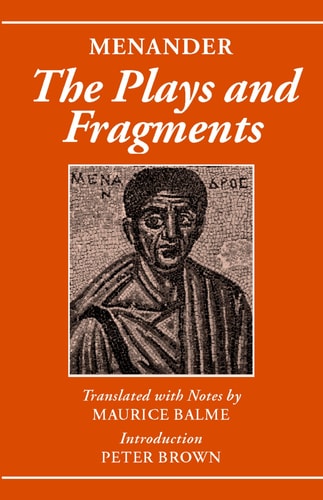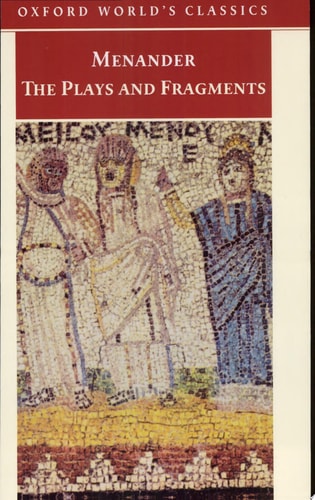
Menander: The Plays and Fragments
0
0
As an Amazon Associate and affiliate partner, Menrva Books earns from qualifying purchases. Learn more
Author Description
The greatest writer of Greek New Comedy and the founding father of European comedy, Menander (c.341-290 BC) wrote over one hundred plays, of which only one complete play and substantial fragments of others survive. Until the twentieth century he was known to us only by short quotations in ancient authors. Since 1907 papyri found in the sand of Egypt have brought to light more and more fragments and in 1958 the papyrus text of a complete play was published, The Bad-Tempered Man (Dyskolos). His romantic comedies deal with the lives of ordinary Athenian families. This new verse translation is accurate and highly readable, providing a consecutive text by using surviving words in the damaged papyri.
Menrva's Summary
THE PULSE
The central conflict involves the intricate social and domestic complications of ordinary Athenian citizens, often driven by misunderstandings, romantic entanglements, and the rigid constraints of ancient Greek societal expectations. Menander’s plays focus on the lives of families, utilizing a framework of New Comedy that emphasizes character-driven humor and situational irony. The protagonist’s objective is typically to resolve a domestic crisis or achieve a romantic union, while opposing forces manifest as stubborn relatives, social status barriers, or the unpredictable nature of fortune. The narrative is presented through verse, reflecting the original structure of the plays while navigating the gaps inherent in the surviving papyrus fragments.
INSIDE THE PAGES
- Exploration of domestic life in ancient Athens
- Focus on romantic comedy and situational humor
- Use of archetypal characters such as the grumpy old man or the clever slave
- Verse translation that maintains rhythmic flow
- Reconstruction of damaged papyrus texts into a consecutive narrative
- Emphasis on human fallibility and social interaction
- Integration of historical context regarding the discovery of the papyri
- Examination of the transition from Old Comedy to New Comedy
THE COLLECTIVE ECHO
Discussion often centers on the significance of Menander as the primary architect of the romantic comedy genre that influenced later European playwrights. Readers frequently highlight the accessibility of this translation, which manages to bridge the gap between ancient Greek verse and modern readability. Critics often note the balance between the surviving complete play and the fragmented works, which offer a glimpse into the broader scope of his output. The atmosphere is consistently described as grounded and observational, focusing on the nuances of human behavior rather than the political satire found in earlier Greek drama. This collection is widely regarded as a primary resource for those interested in the evolution of theatrical structure and character development.
Page Count:
352
Publication Date:
2002-07-18
Publisher:
Oxford University Press
ISBN-10:
0192839837
ISBN-13:
9780192839831
Classics
Drama
Dramatic works
Comedy
Plays