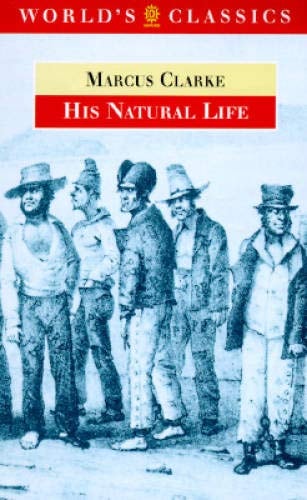
His Natural Life
0
0
As an Amazon Associate and affiliate partner, Menrva Books earns from qualifying purchases. Learn more
Author Description
It is impossible to convey, in words, any idea of the hideous phatasmagoria of shifting limbs and faces which moved throught the evil-smelling twilight of this terrible prison-house. Callot might have drawn it, Dante might have suggested it, but a minute attempt to describe its horrors would but disgust. There are depths in humanity which one cannot explore, as there are mephitic caverns into which one dare not penetrate.' Many critics were indeed `disgusted' by the horrors that Marcus Clarke revealed in His Natural Life. So powerful was his representation of the brutality of transportation that more than a century later historians still struggle to disentangle fact from Clarke's tragic fiction. The novel charts the misfortunes of Richard Devine, falsely accused of murder, through the worse Australian penal settlements, the notorious Macquarie Harbour, Port Arthur, and Norfolk Island, retaining his humanity and spiritual dignity through all the degradations that cruelty and inhumanity could devise. Clarke's novel is indeed a phantasmagoria of horrors - of murder, mutiny, flogging, child suicide, homosexual rape and cannibalism; yet it is also a powerful story of moral courage and heroic resistance to dehumanization. His Natural Life, usually published as For the Term of His Natural Life but here restored to the title Clarke gave it, is the grand epic of the transportation system, and has been described as the greatest nineteenth-century Australian novel. This edition returns to the text Clarke himself prepared for the first single-volume version, published in Melbourne in 1874.
Menrva's Summary
THE PULSE
Richard Devine, a man wrongly accused of murder, must endure the systematic brutality of the Australian penal system while struggling to maintain his moral integrity.
Devine is thrust into a series of notorious penal settlements, including Macquarie Harbour and Norfolk Island, where he faces relentless physical and psychological torment. He is opposed by corrupt authorities and the dehumanizing conditions of nineteenth-century transportation. The narrative follows his long-term struggle against these forces, documenting his efforts to preserve his identity amidst extreme cruelty. The story is presented through a grim, expansive lens that captures the harsh realities of colonial penal life.
INSIDE THE PAGES
- Detailed depictions of nineteenth-century Australian penal settlements
- Exploration of moral courage in the face of systemic dehumanization
- Use of gothic-inspired imagery to describe prison conditions
- Focus on the psychological impact of long-term incarceration
- Incorporation of historical elements regarding the transportation system
- Examination of the conflict between individual dignity and institutional cruelty
- Non-linear progression of the protagonist's suffering across multiple locations
- Emphasis on the contrast between human resilience and institutional depravity
THE COLLECTIVE ECHO
Discussion often centers on the visceral and often disturbing nature of the prose, which critics have long noted for its unflinching look at colonial brutality. Readers frequently highlight the effectiveness of the atmospheric world-building, which transforms the Australian landscape into a character of its own. The novel is widely recognized for its balance between the grim realities of the penal system and the protagonist's internal moral development. Critics often debate the extent to which the narrative blends historical fact with dramatic fiction to achieve its impact. Many readers find the work to be a significant, if challenging, exploration of human endurance under extreme duress.
Page Count:
524
Publication Date:
1900-01-01
Publisher:
Oxford Paperbacks
ISBN-10:
0192838903
ISBN-13:
9780192838902
Prison Drama
classic
FICTION Historical
Victorian
Australia
Historical
Australian