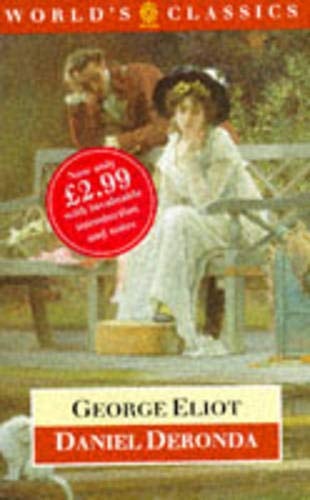
Daniel Deronda
0
0
As an Amazon Associate and affiliate partner, Menrva Books earns from qualifying purchases. Learn more
Author Description
Daniel Deronda, the last of Eliot's novels, is the most complete expression of her idealism. Its main concerns are those of personal morality, of dedication to tradition and roots, and of spiritual identification and sympathy--all set in an era of considerable national and internationalawareness. The text is that of the Clarendon Edition.
Menrva's Summary
THE PULSE
The protagonist, Daniel Deronda, discovers his hidden Jewish heritage, forcing him to reconcile his aristocratic upbringing with a newfound sense of cultural and spiritual identity. Deronda navigates the rigid social hierarchies of Victorian England while attempting to balance his personal moral obligations against the expectations of his peers. He encounters Gwendolen Harleth, a woman trapped by her own vanity and financial desperation, whose life becomes inextricably linked to his own. The narrative employs a dual-plot structure, alternating between the high-society circles of London and the burgeoning exploration of Jewish nationalism. These characters operate within a world defined by strict class boundaries, gendered limitations, and the emerging pressures of global political awareness.
INSIDE THE PAGES
- Dual-narrative structure contrasting Gwendolen Harleth's social trajectory with Deronda's search for identity
- Extensive use of free indirect discourse to explore internal moral dilemmas
- Detailed examination of Victorian class dynamics and gender roles
- Integration of historical and political themes regarding Jewish nationalism
- Focus on the psychological development of characters under social pressure
- Use of symbolic imagery to represent moral and spiritual growth
- Satirical portrayal of the English landed gentry
- Philosophical inquiry into the nature of sympathy and social responsibility
THE COLLECTIVE ECHO
Readers and critics frequently highlight the ambitious scope of this work, noting its departure from the author's earlier, more localized settings. Discussion often centers on the stark contrast between the two primary plot lines, with some readers finding the focus on Jewish identity to be a bold, if dense, exploration of cultural heritage. The pacing is often described as deliberate and meditative, prioritizing character introspection over rapid plot progression. Many scholars emphasize the novel's role as a sophisticated critique of Victorian morality and the limitations placed upon individuals by their social environment. The text remains a subject of debate regarding its structural balance, yet it is widely recognized for its intellectual depth and commitment to exploring complex ethical questions.
Page Count:
768
Publication Date:
1988-04-14
Publisher:
Oxford University Press
ISBN-10:
0192817876
ISBN-13:
9780192817877
Philosophy
Realist
Historical
Jews
classic
Victorian
Social Commentary
England
Community Tags
Other Editions(22)
Independently published
2024
Default edition
Independently published
2020
Independently published
2020

Blackstone Audiobooks
2014
Oup Oxford
2014

OUP Oxford
2014

Nabu Press
2011

BiblioLife
2009

BiblioBazaar
2009
BiblioLife
2009

BiblioLife
2009

BiblioBazaar
2009

BiblioBazaar
2009

BiblioLife
2009

BiblioBazaar
2009

BiblioBazaar
2009

BiblioLife
2009

BiblioLife
2009
BiblioLife
2009

BBC Audiobooks
2001
Oxford University Press
1988
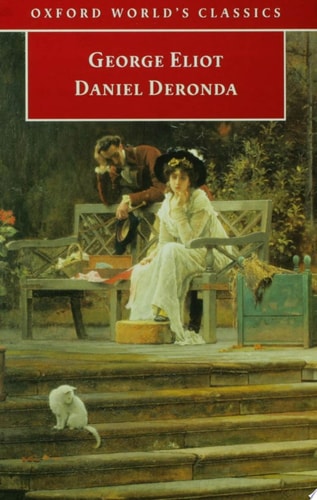
Oxford University Press
1985
Similar Books



Reader Comments
Share Your Thoughts
No comments yet. Be the first to share your thoughts!