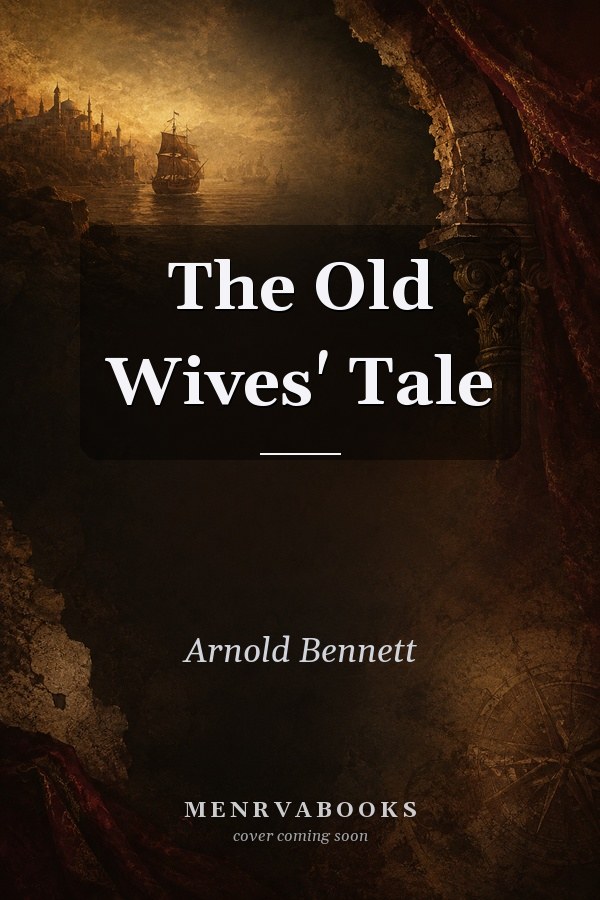
The Old Wives' Tale
0
0
As an Amazon Associate and affiliate partner, Menrva Books earns from qualifying purchases. Learn more
Author Description
First published in 1908, The Old Wives' Tale affirms the integrity of ordinary lives as it tells the story of the Baines sisters—shy, retiring Constance and defiant, romantic Sophia—over the course of nearly half a century. Bennett traces the sisters' lives from childhood in their father's drapery shop in provincial Bursley, England, during the mid-Victorian era, through their married lives, to the modern industrial age, when they are reunited as old women. The setting moves from the Five Towns of Staffordshire to exotic and cosmopolitan Paris, while the action moves from the subdued domestic routine of the Baines household to the siege of Paris during the Franco-Prussian War.
Menrva's Summary
THE PULSE
The divergent paths of two sisters, Constance and Sophia Baines, unfold against the backdrop of a rapidly changing Victorian and Edwardian England. Constance remains anchored to the provincial stability of their father's drapery shop, while Sophia pursues a romantic and tumultuous life in Paris. The narrative follows their individual development over nearly fifty years, contrasting the quiet domesticity of the Five Towns with the chaotic upheaval of the Franco-Prussian War. Bennett employs a third-person omniscient perspective to examine the logical progression of time and the inevitable decline of the human body. The sisters' lives are constrained by the social expectations of their era and the physical realities of aging.
INSIDE THE PAGES
- Detailed depiction of provincial life in the Staffordshire Five Towns
- Exploration of the transition from mid-Victorian values to the modern industrial age
- Contrast between domestic stability and cosmopolitan adventure
- Integration of historical events such as the siege of Paris
- Focus on the minutiae of daily existence and business management
- Character study of two contrasting temperaments
- Examination of the physical and psychological effects of aging
- Use of a measured, observational narrative tone
THE COLLECTIVE ECHO
Readers and critics frequently highlight the meticulous attention to detail that characterizes Bennett's portrayal of ordinary life. Discussion often centers on the stark contrast between the sisters' personalities and how their choices lead to vastly different outcomes. Many observers note the effectiveness of the novel's pacing, which mirrors the slow passage of time across decades. The work is often cited for its commitment to realism and its ability to elevate the mundane aspects of existence into a significant narrative. Critics appreciate the balanced perspective that avoids sentimentality while documenting the inevitable decay of the human condition.
Page Count:
674
Publication Date:
1999-01-01
Publisher:
Oxford University Press
ISBN-10:
0192838245
ISBN-13:
9780192838247
Historical Fiction
Satire
Older women
Family Saga
Manners and customs
Great Britain
England
Family life
Sisters fiction
British literature
Realism
Classic Literature
Long Now Manual for Civilization
Sisters
Brothers and sisters