Aeneid
0
0
As an Amazon Associate and affiliate partner, Menrva Books earns from qualifying purchases. Learn more
Author Description
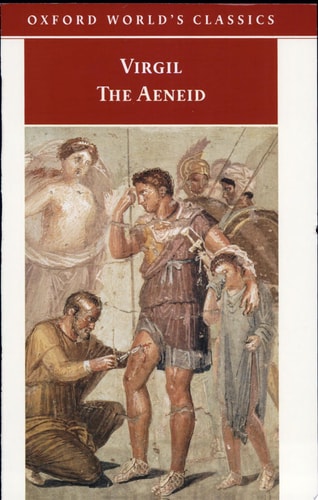
The supreme Roman epic and the greatest poem in Latin, the Aeneid has inspired many of the great European poets including Dante and Milton. The Trojan hero Aeneas, after surviving the sack of Troy, makes his way to the West, urged on by benevolent deities and following a destiny laid down by Jupiter, but harassed and impeded by the goddess Juno. He wins his way to Italy despite many trials, of which the greatest is the tragic outcome of his love affair with Dido, Queen of Carthage. In Italy Aeneas visits the world of the dead, and is forced to wage a fearful war with the indigenous Italian tribes before he can found his city and open the history of Rome. The Aeneid survives as a poem not only of Roman imperialism but also of the whole world of human passion, duty and suffering.
Menrva's Summary
THE PULSE
Following the destruction of Troy, the hero Aeneas must navigate divine interference and personal tragedy to fulfill his destiny as the founder of the Roman race. Driven by the mandate of Jupiter, Aeneas leads his displaced people across the Mediterranean toward a promised land in Italy. He faces constant opposition from the goddess Juno, whose wrath complicates his mission and forces him into a devastating conflict with local Italian tribes. The narrative utilizes an epic structure, blending mythological intervention with the grounded realities of war, duty, and the heavy cost of empire-building.
INSIDE THE PAGES
- Dactylic hexameter verse structure
- Extensive use of divine intervention and mythological allegory
- Exploration of the tension between personal desire and civic duty
- Depiction of the underworld and its prophetic significance
- Tragic character arc of Dido, Queen of Carthage
- Detailed descriptions of ancient warfare and siege tactics
- Symbolic representation of Roman national identity
- Integration of historical myth with political propaganda
THE COLLECTIVE ECHO
Discussion often centers on the complex moral ambiguity of Aeneas, who is frequently analyzed as a figure caught between his own humanity and the rigid demands of his divine mission. Readers frequently highlight the emotional weight of the Dido episode, noting how it serves as a poignant counterpoint to the poem's broader themes of imperial destiny. Critics often examine the stylistic precision of the Latin verse and how it establishes the foundational myths of the Roman state. The work is widely regarded as a primary influence on Western literature, with many readers noting its enduring relevance in discussions regarding the ethics of power and the nature of sacrifice.
Page Count:
480
Publication Date:
1998-01-01
Publisher:
Oxford University Press España, S.A.
ISBN-10:
019283584X
ISBN-13:
9780192835840
Historical
Criticism & Theory
Greek
Epic Poetry
Roman
Mythology
classic
Community Tags
Similar Books