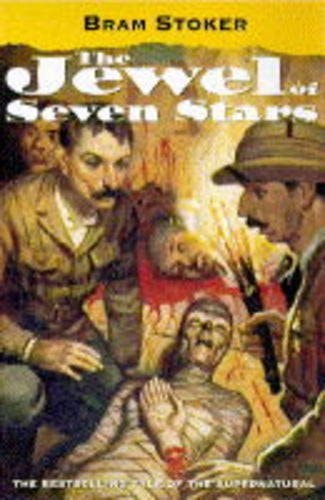
The Jewel of Seven Stars
0
0
As an Amazon Associate and affiliate partner, Menrva Books earns from qualifying purchases. Learn more
Author Description
In the early hours of the morning, a young lawyer is called to the home of a beautiful woman he has just met. Here, her father, an archaeologist, lies in a coma, the victim of a mysterious attack. The injured man is discovered to be dabbling in ritual magic in an attempt to raise an ancient Egyptian queen from the dead. As the hour of his great experiment approaches, a deadly supernatural stuggle begins.First published in 1903 as a successor to Dracula, this is the only available edition of the original version, and includes the alternative ending for the 1912 revised edition.
Menrva's Summary
THE PULSE
A young lawyer finds himself entangled in a perilous supernatural investigation when he is summoned to assist an archaeologist who has fallen into a mysterious coma following a ritualistic experiment. The protagonist must navigate the dangerous intersection of modern law and ancient Egyptian occultism as he attempts to protect the archaeologist's daughter from an encroaching, otherworldly threat. Opposing him are the remnants of an ancient queen's power and the physical dangers posed by those seeking to resurrect her. The narrative unfolds through a tense, atmospheric framework that emphasizes the collision between Victorian rationalism and archaic, forbidden knowledge.
INSIDE THE PAGES
- Exploration of Victorian-era fascination with Egyptology
- Incorporation of occult rituals and ancient curses
- Tense, suspenseful pacing centered on a looming deadline
- First-person perspective providing an intimate view of the investigation
- Themes of scientific hubris and the dangers of forbidden discovery
- Atmospheric settings ranging from private London homes to hidden chambers
- Inclusion of both the original 1903 conclusion and the 1912 revised ending
- Focus on the psychological toll of supernatural encounters
THE COLLECTIVE ECHO
Discussion often centers on how this work functions as a thematic successor to the author's more famous gothic novels. Readers frequently highlight the meticulous attention to detail regarding Egyptian history and the unsettling atmosphere that permeates the narrative. Critics often examine the tension between the protagonist's logical legal background and the increasingly irrational events he witnesses. The inclusion of multiple endings provides a unique opportunity for readers to compare the author's evolving vision of the story's conclusion. Many appreciate the book for its historical significance within the horror genre and its contribution to the mummy-themed subgenre.
Page Count:
240
Publication Date:
1996-06-27
Publisher:
Oxford University Press
ISBN-10:
0192832190
ISBN-13:
9780192832191
Adventure
Mystery
Gothic Horror
classic
Archaeologists fiction
Fiction - Horror
Supernatural
Community Tags
Other Editions(37)

Independently Published
2021
Default edition
Amazon Digital Services LLC - KDP Print US
2021

Independently Published
2021
Amazon Digital Services LLC - KDP Print US
2021

Independently Published
2020

Independently Published
2020
Independently Published
2020
Independently Published
2020
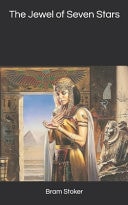
Amazon Digital Services LLC - KDP Print US
2020

Independently Published
2020
Independently Published
2020
Independently Published
2019

CreateSpace Independent Publishing Platform
2018
CreateSpace Independent Publishing Platform
2018
CreateSpace Independent Publishing Platform
2018
CreateSpace Independent Publishing Platform
2018
CreateSpace Independent Publishing Platform
2018

Independently Published
2018

CreateSpace Independent Publishing Platform
2017
CreateSpace Independent Publishing Platform
2017
CreateSpace Independent Publishing Platform
2017
CreateSpace Independent Publishing Platform
2017
CreateSpace Independent Publishing Platform
2016
CreateSpace Independent Publishing Platform
2016
CreateSpace Independent Publishing Platform
2015
CreateSpace Independent Publishing Platform
2015

CreateSpace Independent Publishing Platform
2014
CreateSpace Independent Publishing Platform
2014

Hard Press
2006

eBooksLib
2005

eBooksLib
2005
1st World Publishing
2004

EBooksLib
2004

NuVision Publications
2003
Oxford University Press
1996

Hawk Press
1992

Amereon Limited
1990
Similar Books



Reader Comments
Share Your Thoughts
No comments yet. Be the first to share your thoughts!