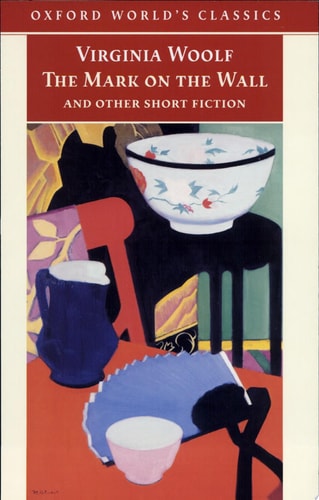
The Mark on the Wall and Other Short Fiction
0
0
As an Amazon Associate and affiliate partner, Menrva Books earns from qualifying purchases. Learn more
Author Description
'I shall never forget the day I wrote "The Mark on the Wall" - all in a flash, as if flying, after being kept stone breaking for months. "The Unwritten Novel" was the great discovery, however. That - again in one second - showed me how I could embody all my deposit of experience in a shape that fitted it... I saw, branching out of the tunnel I made, when I discovered that method of approach, Jacob's Room, Mrs Dalloway etc - How I trembled with excitement.' The thrill Woolf got from these stories is readily apparent to the reader. She wrote them in defiance of convention, with a heady feeling of liberation and with a clear sense that she was breaking new ground. Indeed, if she had not made her bold and experimental forays into the short story in the period leading up to the publication of Jacob's Room (1922), it seems certain that her arrival as a great modernist novelist would have been delayed. Quirky, unrestrained, disturbing and surprising, many of these stories, particularly the early ones, are essential to an understanding of Woolf's development as a writer. She thought some of her short fiction might be 'unprintable' but, happily, she was mistaken.
Menrva's Summary
THE PULSE
Virginia Woolf challenges the traditional boundaries of narrative structure by prioritizing internal consciousness over external plot progression. The protagonist in these stories often exists in a state of heightened observation, where a singular object or fleeting thought serves as the catalyst for an expansive exploration of memory and identity. Woolf employs a stream-of-consciousness technique that forces the reader to navigate the fluid, often non-linear, landscape of the human mind. These stories function as experimental laboratories, testing the limits of prose to capture the ephemeral nature of experience against the rigid constraints of social expectation.
INSIDE THE PAGES
- Stream-of-consciousness narrative technique
- Focus on internal monologue over external action
- Exploration of memory and subjective perception
- Experimental prose structures
- Impressionistic descriptions of domestic settings
- Subversion of traditional short story conventions
- Philosophical inquiry into the nature of reality
- Interplay between mundane objects and profound psychological states
THE COLLECTIVE ECHO
Discussion often centers on the role these stories played in the development of Woolf's later, more expansive novels. Readers frequently highlight the shift from traditional narrative arcs to the impressionistic, interior-focused style that defines her modernist contributions. Critics often note that the collection provides a clear view of the author's early experimentation with form and her defiance of Victorian storytelling norms. The pacing is described as meditative and rhythmic, favoring psychological depth over rapid plot development. Many readers find the collection useful for understanding the evolution of the modernist movement in early twentieth-century literature.
Page Count:
109
Publication Date:
2001-01-01
Publisher:
Oxford Univ Pr
ISBN-10:
0192839691
ISBN-13:
9780192839695
Literary Fiction
British literature
Short Stories
Modernist
Classic Literature
Community Tags
Similar Books