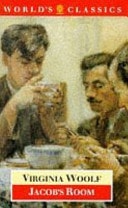
Jacob's Room
0
0
As an Amazon Associate and affiliate partner, Menrva Books earns from qualifying purchases. Learn more
Author Description
"amazing... a new type of fiction has swum into view." —E.M. Forster Published the same year as James Joyce's ULYSSES and T.S. Eliot's THE WASTE LAND, JACOB'S ROOM is Virginia Woolf's first foray into impressionist fiction. The characters of JACOB'S ROOM interlock memories of Jacob Flanders, wrestling from obscurity his ephemeral existence. Is a man's life, in memory, nothing more than the imposed interpretations of outsiders—in this case the upper-middle-class Clara Durant or the bohemian art student Florinda—or does authentic meaning reveal itself in spite of our limited subjectivities? “It seems then that men and women are equally at fault. It seems that a profound, impartial, and absolutely just opinion of our fellow-creatures is utterly unknown. Either we are men, or we are women. Either we are cold, or we are sentimental. Either we are young, or growing old. In any case life is but a procession of shadows, and God knows why it is that we embrace them so eagerly, and see them depart with such anguish, being shadows.” -JACOB'S ROOM
Menrva's Summary
THE PULSE
The narrative centers on the elusive life of Jacob Flanders, tracing his existence through the fragmented perceptions and memories of those who encounter him. As Jacob moves from childhood to adulthood, the reader observes him primarily through the external viewpoints of the women in his life, such as Clara Durant and Florinda. The text operates as a series of impressions rather than a traditional linear biography, forcing the reader to construct a portrait of the protagonist from incomplete and subjective data. The world is defined by the limitations of human perspective and the ephemeral nature of identity within the upper-middle-class social structures of early 20th-century England.
INSIDE THE PAGES
- Stream of consciousness narrative technique
- Impressionistic prose style focusing on sensory details
- Non-linear chronological structure
- Multiple shifting perspectives
- Emphasis on internal monologue over external action
- Exploration of the subjectivity of memory
- Minimalist character development through indirect observation
- Focus on the transient nature of human existence
THE COLLECTIVE ECHO
Readers and critics frequently note the stylistic shift this work represents in the development of the modernist novel. Discussion often centers on the effectiveness of Woolf's technique in capturing the fluidity of consciousness and the difficulty of truly knowing another person. Many highlight the contrast between the vivid, atmospheric descriptions and the deliberate absence of a traditional plot. The work is often studied for its thematic preoccupation with the limitations of human understanding and the way individuals are defined by the projections of others. Readers who appreciate experimental prose and character-driven narratives often find the text rewarding, though some note the pacing requires significant patience due to its unconventional structure.
Page Count:
305
Publication Date:
1992-01-02
Publisher:
Oxford Paperbacks
ISBN-10:
0192818198
ISBN-13:
9780192818195
Literary Fiction
British literature
Classic Literature
Contemporary
Modernist
Community Tags
Other Editions(11)



Similar Books



Reader Comments
Share Your Thoughts
No comments yet. Be the first to share your thoughts!