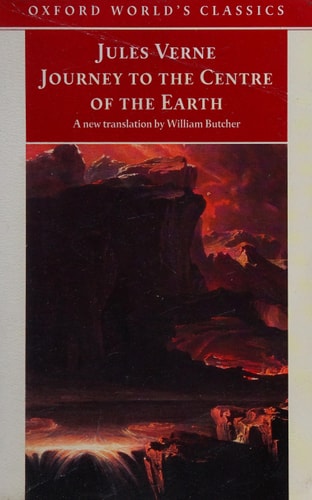
Journey to the Centre of the Earth
0
0
As an Amazon Associate and affiliate partner, Menrva Books earns from qualifying purchases. Learn more
Author Description
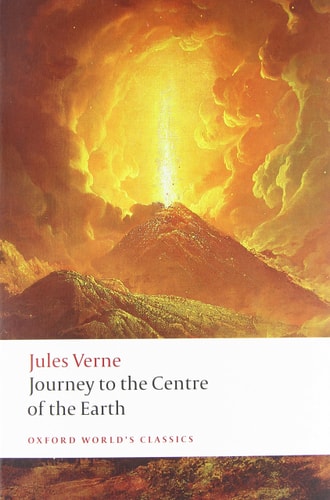
Now available in a new translation, this classic of nineteenth century French literature has been consistently praised for its style and its vision of the world. Professor Lidenbrock and his nephew Axel travel across Iceland, and then down through an extinct crater toward a sunless sea where they enter a living past and are confronted with the origins of man. Exploring the prehistory of the globe, this novel can also be read as a psychological quest, for the journey itself is as important as arrival or discovery. Verne's distinctive combination of realism and Romanticism has marked figures as diverse as Sartre and Tournier, Mark Twain and Conan Doyle.
Menrva's Summary
THE PULSE
Professor Lidenbrock and his nephew Axel initiate a perilous descent into an Icelandic volcano to uncover the secrets hidden within the Earth's core. Driven by the discovery of an ancient runic manuscript, the protagonist and his reluctant nephew navigate the physical hazards of subterranean caverns and volcanic tunnels. They face extreme environmental constraints, including limited resources, subterranean navigation, and the psychological strain of their isolation. The narrative framework utilizes a first-person perspective, documenting the transition from scientific curiosity to the confrontation with prehistoric realities.
INSIDE THE PAGES
- Detailed geological and mineralogical descriptions
- First-person narrative perspective from Axel
- Exploration of 19th-century scientific theories
- Contrast between rationalism and the unknown
- Pacing structured around the descent and discovery
- Integration of historical and mythological references
- Focus on the tension between academic ambition and survival
- Vivid depiction of subterranean ecosystems
THE COLLECTIVE ECHO
Readers and critics frequently highlight the balance between Verne's rigorous technical detail and the imaginative scope of the subterranean world. Discussion often centers on the contrast between Professor Lidenbrock's obsessive drive and Axel's cautious, humanizing perspective. The work is noted for its influence on the development of speculative fiction and its ability to maintain suspense through environmental obstacles rather than traditional antagonists. Many observers appreciate how the text functions simultaneously as a scientific inquiry and a psychological study of human endurance. The atmosphere is consistently praised for its ability to render the impossible with a sense of grounded realism.
Page Count:
272
Publication Date:
1998-09-17
Publisher:
Oxford University Press
ISBN-10:
0192836757
ISBN-13:
9780192836755
Adventure
Science Fiction
Science Fiction
classic
Geology
Exploration
Community Tags
Other Editions(8)


Similar Books













Reader Comments
Share Your Thoughts
No comments yet. Be the first to share your thoughts!