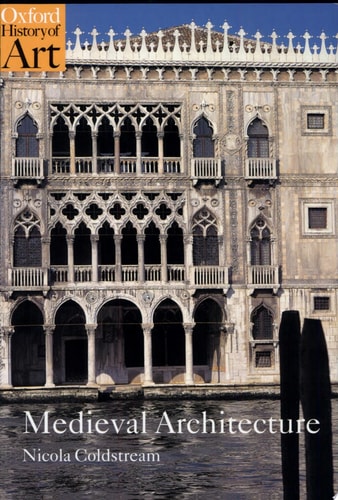
Medieval Architecture
0
0
As an Amazon Associate and affiliate partner, Menrva Books earns from qualifying purchases. Learn more
Author Description
Medieval architecture comprises much more than the traditional image of Gothic cathedrals and the castles of chivalry. A great variety of buildings--synagogues, halls, and barns--testify to the diverse communities and interests in western Europe in the centuries between 1150 and 1550. This book looks at their architecture from an entirely fresh perspective, shifting the emphasis away from such areas as France towards the creativity of other regions, including central Europe and Spain. Treating the subject thematically, Coldstream seeks out what all buildings, both religious and secular, have in common, and how they reflect the material and spiritual concerns of the people who built and used them. Furthermore, the author considers how and why, after four centuries of shaping the landscapes and urban patterns of Europe, medieval styles were superseded by classicism.
Menrva's Summary
THE THESIS
This work investigates the diverse architectural landscape of western Europe between 1150 and 1550, challenging the traditional focus on Gothic cathedrals and chivalric castles. Nicola Coldstream, an expert in medieval art and architecture, utilizes a thematic framework to analyze how religious and secular structures reflect the material and spiritual priorities of their builders. By shifting the geographic focus toward central Europe and Spain, the author provides a comprehensive re-evaluation of how medieval building practices shaped the urban and rural environments of the era.
THE SCOPE MAP
What You Will Find
- Analysis of diverse building types including synagogues, halls, and barns
- Thematic examination of architectural commonalities across western Europe
- Historical transition from medieval styles to classicism
- Geographic expansion beyond traditional French-centric narratives
Scope Limits
- Does not provide an exhaustive catalog of every individual medieval structure
- Focuses primarily on the period between 1150 and 1550
THE AUTHORITY PERSPECTIVE
Experts and students of architectural history frequently cite this text for its ability to synthesize complex regional developments into a cohesive thematic narrative. Readers often note that the prose is accessible yet academically rigorous, making it a standard reference for understanding the broader social context of medieval construction.
Page Count:
256
Publication Date:
2002-07-18
Publisher:
Oxford University Press
ISBN-10:
0192842765
ISBN-13:
9780192842763
Architecture
Non-Fiction
European History
Art History