Morality and Socially Constructed Norms
0
0
As an Amazon Associate and affiliate partner, Menrva Books earns from qualifying purchases. Learn more
Author Description
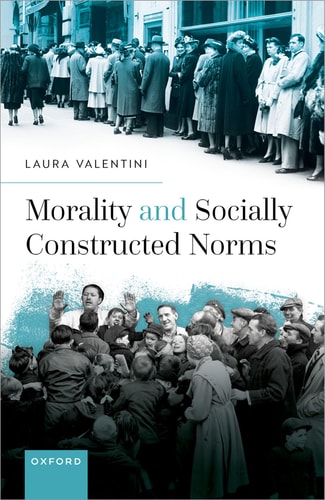
Observe social distancing. Tip your waiter. Give priority to the elderly. Stop at the red light. Pay your taxes. Do not chew with your mouth open. These are imperatives we face every day, imposed upon us by norms that happen to be generally accepted in our environment. Call these 'socially constructed norms'. A constant presence in our lives, these norms elicit mixed feelings. On the one hand, we treat them as valid standards of behaviour and respond to their violation with emotions such disapproval, resentment, and guilt. On the other hand, we look at them with suspicion: after all, they are arbitrary human constructs that may contribute to oppression and injustice. In light of this ambivalence, it is important to have a criterion telling us when, if ever, we are morally bound by socially constructed norms and when we should instead disregard them. Morality and Socially Constructed Norms systematically develops such a criterion. It traces the moral significance of those norms to the agential commitments that underpin them, and explains why those commitments ought to be respected, provided the content of the corresponding norms is consistent with independent moral constraints. The book then explores the implications of this view for three core questions in moral, legal, and political philosophy: the grounding of moral rights, the obligation to obey the law, and the wrong of sovereignty violations. Morality and Socially Constructed Norms shows how much progress can be made in normative theorizing when we give socially constructed norms their (moral) due.
Menrva's Summary
THE THESIS
This book investigates the moral status of socially constructed norms and establishes a criterion for determining when individuals are morally obligated to adhere to them. Laura Valentini, a professor of political philosophy, utilizes a framework rooted in agential commitments to bridge the gap between arbitrary social conventions and independent moral requirements. She argues that while these norms are human-made, they carry moral weight when their underlying commitments align with broader ethical constraints.
THE SCOPE MAP
What You Will Find
- A theoretical framework linking social norms to individual agential commitments
- Analysis of the moral grounding of rights and legal obligations
- Application of the theory to the ethics of sovereignty and international relations
Scope Limits
- The text does not provide an exhaustive list of every specific social norm in existence
- It does not focus on the sociological or psychological origins of norm formation, prioritizing the normative moral status instead
THE AUTHORITY PERSPECTIVE
Scholars in political and moral philosophy frequently cite this work for its rigorous analytical approach to the intersection of convention and morality. Experts highlight the text as a sophisticated contribution to normative theory that clarifies the often-ambiguous relationship between social expectations and ethical duty.
Page Count:
256
Publication Date:
2024-01-01
Publisher:
Oxford University Press
ISBN-10:
0192845799
ISBN-13:
9780192845795
Philosophy
Political Philosophy
Social Theory
Ethics
Community Tags
Other Editions(2)

Similar Books