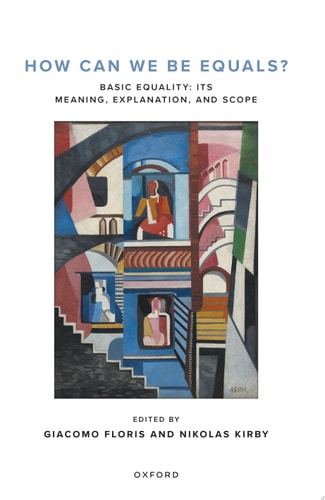
How Can We Be Equals?
0
0
As an Amazon Associate and affiliate partner, Menrva Books earns from qualifying purchases. Learn more
Author Description
That all human beings are one another's moral equals is taken by many to be the fundamental premise of contemporary moral, political and legal theory. It is also the demand of individuals and groups to be treated as equals that drives much of political practice and protest today. However, what does such a claim of 'basic equality' between human beings mean? How can it possibly be true, given that we are unequals in almost every other aspect of our lives? And, who, exactly, is meant to fall within its scope?This volume brings together leading thinkers on basic equality to address these questions. Collectively, they explore the concept of equality in history and criticism, analysing and presenting solutions to the most pressing challenges that have been raised against the principle.
Menrva's Summary
THE THESIS
This volume investigates the foundational premise of basic equality by questioning how human beings can be considered moral equals despite their manifest physical, intellectual, and social differences. The authors, Giacomo Floris and Nikolas Kirby, curate a collection of essays from prominent thinkers to examine the historical development, theoretical challenges, and practical scope of equality. The text aims to reconcile the abstract ideal of human equality with the reality of human inequality in contemporary political and legal discourse.
THE SCOPE MAP
What You Will Find
- Historical analysis of the concept of basic equality
- Critical examination of arguments against the principle of equality
- Theoretical frameworks for defining the scope of moral equality
Scope Limits
- Does not provide a singular, unified definition of equality
- Does not focus on specific economic policy implementations
THE AUTHORITY PERSPECTIVE
Experts identify this collection as a significant contribution to contemporary political philosophy, noting its utility for scholars and students of ethics. Readers frequently highlight the academic density of the prose and the rigor with which the contributors address complex moral dilemmas.
Page Count:
256
Publication Date:
2024-01-01
Publisher:
Oxford University Press
ISBN-10:
019287148X
ISBN-13:
9780192871480
Philosophy
Politics
Legal Theory
Ethics
Specific Topics
Political Philosophy
Ethics & Morality
Social Theory
Community Tags
Similar Books