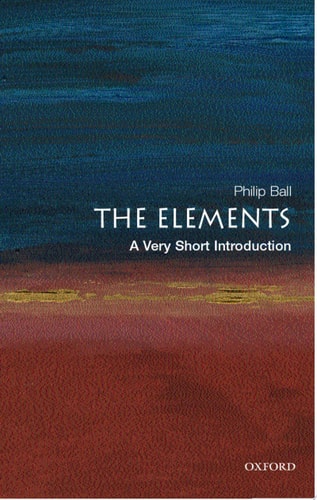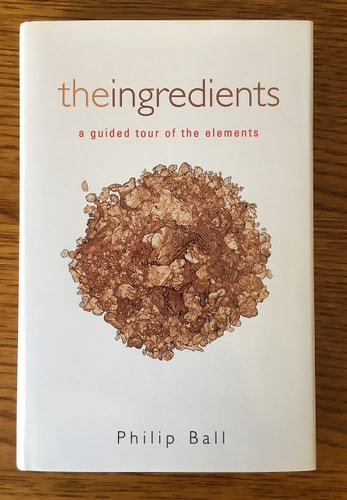
The Ingredients: A Guided Tour of the Elements
0
0
As an Amazon Associate and affiliate partner, Menrva Books earns from qualifying purchases. Learn more
Author Description
In The Ingredients, Philip Ball blends history and science as he offers an illuminating look at our centuries-long struggle to understand the nature of the physical world.It's been a long journey from the ancient belief in four elements--earth, water, fire, air--to the hundred plus elements that occupy the modern periodic table, and Ball makes a perfect tour guide, highlighting the many points of interest on the way. He introduces us to key scientists such as Lavoisier, who named oxygen, proved that water is not an element, demolished the ancient 4-elements theory, and lost his head to the guillotine. Ball highlights the unexpected opportunities for making useful things from the riches found on the periodic table. We learn, for instance, that the seemingly useless argon (after the Greek argos, 'lazy'--because it did nothing) makes perfect filler for light bulbs, because no matter how hot the bulb gets, argon won't react. Likewise, silicon, a very poor conductor of electricity (hence the label semiconductor) is perfect for computer chips, because the slow movement of electrons is easier to manipulate. Ball shows us how to read the periodic table and he recounts Mendeleyev's tale of discovering the correct form to the table "in a dream." He also explains the difficulties of defining and identifying the elements, the principles behind the formation of synthetic elements, and the ways in which particular elements (gold, iron, oxygen) shaped culture and technology.From the alchemical quest for the Philosopher's Stone to the legend of the Midas touch, The Ingredients provides an engaging look at the elements that make up the world we live in.
Menrva's Summary
THE THESIS
How did humanity transition from the ancient four-element theory to the complex, modern understanding of the periodic table? Philip Ball, a noted science writer, examines the historical and scientific evolution of our knowledge regarding the fundamental building blocks of matter. By tracing the contributions of key figures and the practical applications of specific elements, the book argues that the periodic table is a dynamic record of human ingenuity and cultural development.
THE SCOPE MAP
What You Will Find
- Historical development of chemical theory from alchemy to modern physics
- Biographies of influential scientists such as Lavoisier and Mendeleyev
- Practical applications of elements in modern technology and industry
- Explanations of synthetic element formation and atomic properties
Scope Limits
- Does not provide a comprehensive technical textbook analysis of quantum mechanics
- Does not focus on advanced laboratory synthesis procedures
THE AUTHORITY PERSPECTIVE
Experts and readers frequently cite this work as an accessible entry point for those interested in the history of chemistry. The prose is noted for its clarity, successfully balancing technical scientific concepts with engaging historical narratives.
Page Count:
224
Publication Date:
2003-01-16
Publisher:
Oxford University Press
ISBN-10:
0192841009
ISBN-13:
9780192841001
Non-Fiction
Science
Popular Science
Chemistry
Reference
Science History
Community Tags
Similar Books