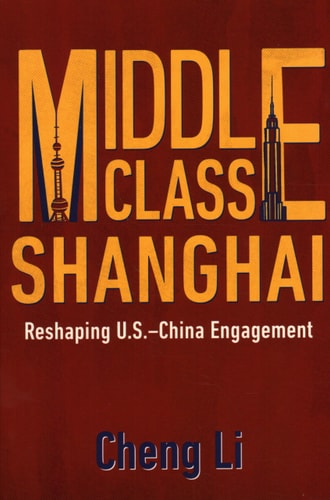
Middle Class Shanghai: Reshaping U.S.-China Engagement
0
0
As an Amazon Associate and affiliate partner, Menrva Books earns from qualifying purchases. Learn more
Author Description
The United States may be headed toward conflict with China unless Washington recasts its understanding of contemporary Chinese society. After four decades of engagement, the United States and the People's Republic of China now appear to be locked on a collision course that has already fomented a trade war, seems likely to produce a new cold war, and could even result in military conflict. The deterioration of the bilateral relationship is the culmination of years of disputes, disillusionment, disappointment, and distrust between the two countries. Washington has legitimate concerns about Beijing's excessive domestic political control and aggressive foreign policy stances, just as Chinese leaders believe the United States still has futile designs on blocking their country's inevitable rise to great power status. In Middle Class Shanghai, Cheng Li, who grew up in Shanghai during the oppressive years of Mao's Cultural Revolution, argues that American policymakers must not lose sight of the expansive dynamism and diversity in present-day China. The caricature of China as a monolithic Communist apparatus set on exporting its ideology and development model is simplistic and misguided. Drawing on empirical research in the realms of higher education, avant-garde art, architecture, and law, Li's unique study highlights the strong, constructive impact of bilateral exchanges. Combining eclectic human stories with striking new data analysis, Li's book addresses the possibility that the development of China's class structure and cosmopolitan culture--exemplified and led by Shanghai--could provide a force for reshaping U.S.-China engagement. Both countries should build upon the deep cultural and educational exchanges that have bound them together for decades. Li concludes that U.S. policymakers should neither underestimate the role and strength of the Chinese middle class nor ostracize or alienate this force with policies that push it toward jingoisti
Menrva's Summary
THE THESIS
The United States and China are on a collision course, risking conflict unless Washington fundamentally rethinks its understanding of contemporary Chinese society. The author, Cheng Li, who experienced Mao's Cultural Revolution firsthand, argues against the simplistic view of China as a monolithic communist state. Instead, he posits that the dynamism and diversity within China, particularly exemplified by its growing middle class in Shanghai, can serve as a force to reshape U.S.-China engagement. The book draws on empirical research across various sectors to highlight the positive impact of bilateral exchanges and suggests that fostering these connections is crucial for a more constructive relationship.
THE SCOPE MAP
- Analysis of the current deterioration in U.S.-China relations, including trade wars and the potential for a new Cold War.
- Examination of the Chinese middle class, with a specific focus on Shanghai as a leading example of cosmopolitan culture and development.
- Exploration of empirical research in higher education, avant-garde art, architecture, and law in China.
- Highlighting the constructive impact of bilateral exchanges between the U.S. and China.
- Discussion of the role of cultural and educational exchanges in binding the two nations.
- Argument for policymakers to understand and engage with the Chinese middle class rather than alienate it.
THE AUTHORITY PERSPECTIVE
The book argues that U.S. policymakers must move beyond outdated caricatures of China and recognize the significant influence of its burgeoning middle class, particularly in Shanghai. By drawing on empirical research and personal anecdotes, Cheng Li suggests that cultural and educational exchanges have fostered a dynamic and diverse society that can positively reshape the bilateral relationship. The work advocates for a nuanced approach that acknowledges China's development and avoids policies that might push its middle class toward nationalism. This perspective offers a counterpoint to prevailing views of inevitable conflict, emphasizing the potential for engagement through shared cultural and intellectual pursuits.
Page Count:
484
Publication Date:
2021-05-11
Publisher:
Bloomsbury Academic
ISBN-10:
0815739095
ISBN-13:
9780815739098
Politics
Non-Fiction
History
International relations
Asian Studies
Sociology
Community Tags
Similar Books