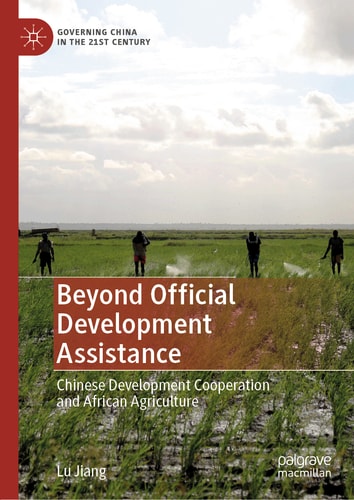
Beyond Official Development Assistance
0
0
As an Amazon Associate and affiliate partner, Menrva Books earns from qualifying purchases. Learn more
Author Description
This book investigates China’s contemporary development cooperation mentality and modality through the case of its agricultural engagement with Africa. It identifies three models, namely traditional agro-aid, innovative agro-aid and agribusiness models, of Chinese current agro-development cooperation with Africa, and unpacks the different models by tracing their historical origins and examining the actual practice based on project-level fieldwork conducted in Mozambique and South Africa. The book provides a preliminary and qualitative evaluation of China’s current agro-development cooperation with Africa, and explains the ‘implementation gaps’ as observed on the ground adopting a public policy approach. It also compares the Chinese way of development cooperation with that of the traditional donors (particularly the OECD-DAC members), and calls for a broadening understanding for international development cooperation that can allow win-win ideology and embrace diversified cooperation forms beyond the official development assistance (ODA).
Menrva's Summary
THE THESIS
This book examines China's evolving approach to development cooperation, particularly its agricultural engagement with Africa. The author, Lu Jiang, investigates three distinct models: traditional agro-aid, innovative agro-aid, and agribusiness. Through extensive fieldwork in Mozambique and South Africa, the book traces the historical roots of these models and analyzes their practical implementation, offering a qualitative evaluation of their effectiveness. It also addresses observed 'implementation gaps' using a public policy framework and contrasts China's methods with those of traditional donors like OECD-DAC members.
THE SCOPE MAP
- Analysis of China's contemporary development cooperation mentality and modality.
- Identification and examination of three models: traditional agro-aid, innovative agro-aid, and agribusiness.
- Historical tracing of the origins of Chinese agro-development cooperation with Africa.
- Project-level fieldwork conducted in Mozambique and South Africa.
- Preliminary and qualitative evaluation of China’s current agro-development cooperation with Africa.
- Explanation of 'implementation gaps' using a public policy approach.
- Comparison of Chinese development cooperation with traditional donors (OECD-DAC members).
- Argument for broadening the understanding of international development cooperation to include win-win ideologies and diversified forms beyond ODA.
THE AUTHORITY PERSPECTIVE
The book offers a detailed analysis of China's development cooperation in Africa, focusing on its agricultural initiatives. It presents a novel categorization of Chinese engagement models and grounds its findings in empirical fieldwork. The work is positioned as a contribution to understanding international development beyond traditional ODA frameworks. The comparative approach highlights differences and similarities with established donor practices, suggesting a need for more inclusive development paradigms.
Page Count:
273
Publication Date:
2019-09-13
Publisher:
Springer Nature
ISBN-10:
9813295074
ISBN-13:
9789813295070
Non-Fiction
Economics
Politics
Agriculture
International relations
Community Tags
Similar Books