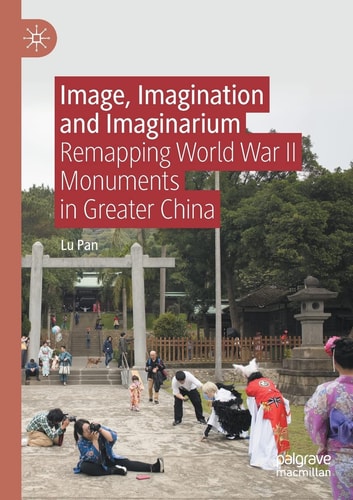
Image, Imagination and Imaginarium: Remapping World War II Monuments in Greater China
0
0
As an Amazon Associate and affiliate partner, Menrva Books earns from qualifying purchases. Learn more
Author Description
This book explores five cases of monument and public commemorative space related to World War II (WWII) in contemporary China (Mainland), Hong Kong and Taiwan, all of which were built either prior to or right after the end of the War and their physical existence still remains. Through the study on the monuments, the project illustrates past and ongoing controversies and contestations over Chinese nation, sovereignty, modernism and identity. Despite their historical affinities, the three societies in question, namely, Mainland China, Hong Kong and Taiwan, vary in their own ways of telling, remembering and forgetting WWII. These divergences are not only rooted in their different political circumstances and social experiences, but also in their current competitions, confrontations and integrations. This book will be of great interest to historians, sinologists and analysts of new Asian nationalism.
Menrva's Summary
THE THESIS
This book investigates the complex legacy of World War II monuments in Greater China, examining how these sites reflect and shape national identity, sovereignty, and historical memory. It analyzes five case studies of WWII monuments and commemorative spaces in Mainland China, Hong Kong, and Taiwan, focusing on structures built around the war's end that still exist today. The research highlights the divergent ways these three societies remember and forget WWII, influenced by their distinct political histories and current socio-political dynamics. The book ultimately explores the ongoing controversies and contestations surrounding Chinese nationhood and identity as manifested through these physical sites.
THE SCOPE MAP
- Analysis of five specific World War II monuments and public commemorative spaces in Mainland China, Hong Kong, and Taiwan.
- Exploration of the historical context of these sites, focusing on structures built before or immediately after the war.
- Examination of controversies and contestations over Chinese nationhood, sovereignty, modernism, and identity.
- Comparison of divergent approaches to remembering and forgetting WWII across Mainland China, Hong Kong, and Taiwan.
- Discussion of how current political circumstances, social experiences, and inter-societal relations influence historical memory.
- Insights into the dynamics of new Asian nationalism as reflected in commemorative practices.
- Focus on the physical existence and ongoing relevance of these historical sites.
THE AUTHORITY PERSPECTIVE
This book offers a detailed comparative study of World War II commemorative sites across Greater China, providing valuable insights for historians and scholars of Asian nationalism. The analysis of divergent memory practices in Mainland China, Hong Kong, and Taiwan reveals the intricate relationship between historical events and contemporary identity formation. The work is positioned to be of significant interest to specialists in Sinology and those studying the evolving landscape of nationalism in the region. Its focus on tangible monuments as sites of contestation offers a unique lens through which to understand complex historical narratives.
Page Count:
415
Publication Date:
2022-01-04
Publisher:
Springer Nature Singapore
ISBN-10:
981159676X
ISBN-13:
9789811596766
History
Non-Fiction
Nationalism
Asian Studies
Monuments
Commemoration
Community Tags
Similar Books