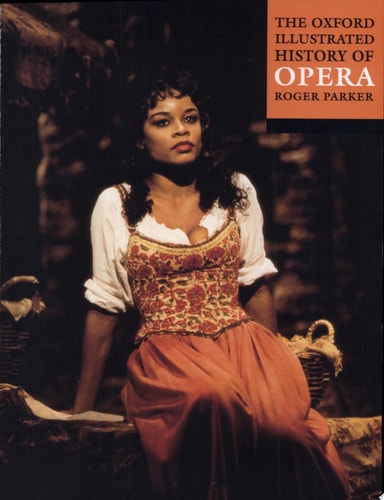
The Oxford Illustrated History of Opera
0
0
As an Amazon Associate and affiliate partner, Menrva Books earns from qualifying purchases. Learn more
Author Description
In its lavish amalgam of theatrical and musical resources, its flamboyant charm, its extravagant appeal to the heart and the mind, and its seemingly inexhaustible power to move and astonish us, opera is clearly the most spectacular of all the arts. Now, in this beautifully illustrated, oversized volume--boasting over 250 pictures, 30 in full color--eleven leading authorities chronicle the full sweep of this stunning musical genre, ranging from the earliest known works to such recent experimental efforts as Robert Wilson and Philip Glass's Einstein on the Beach.The contributors--including such noted opera critics as William Ashbrook, Paul Griffiths, and Barry Millington--provide superb coverage of all the major periods. We read of the remarkable success of opera in republican Venice, where by 1650 some fifty operas had been performed, including masterworks by Monteverdi, the giant of the era. We learn of opera seria--which within the world of eighteenth-century Italian opera was the summit of prestige--and opera buffa, most noted today for three major works by Mozart: Le Nozze di Figaro, Don Giovanni, and Cosi Fan Tutti. We explore the peak of opera's popularity in nineteenth-century France, Italy, and Germany, with astute commentary on such major composers as Berlioz, Bizet, Rossini, Donizetti, and especially Wagner and Verdi. And we examine the remarkably diverse works of our own century, from Strauss's Der Rosenkavalier and Alban Berg's Wozzeck to Benjamin Britten's Death in Venice and John Adams's Nixon in China. Throughout, the contributors illuminate how opera often reflects the cultural concerns of the age, how it is part of the social fabric, and in three fascinating sections on staging, singers, and the social climate, they give us a look behind the scenes as well as a feel for what opera was like in the past. We discover, for instance, that before the late nineteenth century, patrons were not expected to arrive on time, sit still, keep quiet, concentrate on
Menrva's Summary
THE THESIS
This volume investigates the historical evolution of opera as a complex synthesis of theatrical and musical traditions across four centuries. Edited by Roger Parker, the text compiles essays from eleven prominent musicologists and critics to examine how opera functions as both a high-art form and a reflection of shifting social and cultural landscapes. The contributors utilize historical records, performance analysis, and biographical data to trace the development of the genre from its seventeenth-century origins to contemporary experimental works.
THE SCOPE MAP
What You Will Find
- Chronological analysis of opera from early Venetian works to twentieth-century avant-garde productions.
- Detailed examinations of major stylistic movements including opera seria, opera buffa, and the works of Wagner and Verdi.
- Specialized chapters focusing on the mechanics of staging, the role of singers, and the evolving social climate of opera houses.
Scope Limits
- The text does not provide an exhaustive catalog of every opera ever composed.
- It focuses primarily on the Western operatic tradition and does not cover non-Western musical theater forms.
THE AUTHORITY PERSPECTIVE
Experts frequently cite this work as a comprehensive and accessible reference for students and enthusiasts of classical music. Readers often note that the inclusion of extensive visual documentation complements the scholarly depth of the essays, making it a standard resource for understanding the cultural history of the genre.
Page Count:
584
Publication Date:
2001-06-28
Publisher:
Oxford University Press
ISBN-10:
0192854453
ISBN-13:
9780192854452
Music
History
Reference
Opera
Criticism history
Community Tags
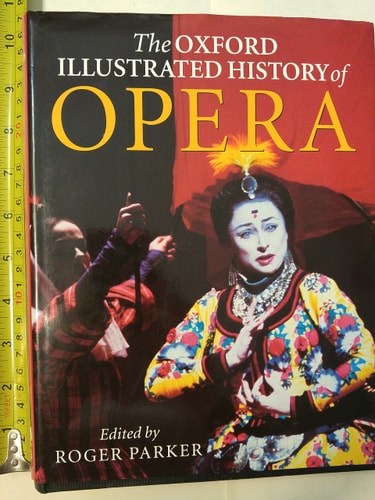
Other Editions(2)
Similar Books
Reader Comments
Share Your Thoughts
No comments yet. Be the first to share your thoughts!