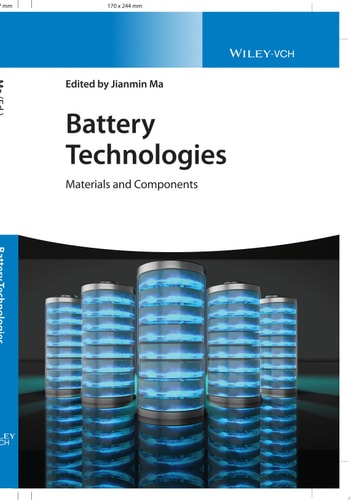
Battery Technologies: Materials and Components
0
0
As an Amazon Associate and affiliate partner, Menrva Books earns from qualifying purchases. Learn more
Author Description
Battery Technologies A state-of-the-art exploration of modern battery technology In Battery Technologies: Materials and Components, distinguished researchers Dr. Jianmin Ma delivers a comprehensive and robust overview of battery technology and new and emerging technologies related to lithium, aluminum, dual-ion, flexible, and biodegradable batteries. The book offers practical information on electrode materials, electrolytes, and the construction of battery systems. It also considers potential approaches to some of the primary challenges facing battery designers and manufacturers today. Battery Technologies: Materials and Components provides readers with: A thorough introduction to the lithium-ion battery, including cathode and anode materials, electrolytes, and binders Comprehensive explorations of lithium-oxygen batteries, including battery systems, catalysts, and anodes Practical discussions of redox flow batteries, aqueous batteries, biodegradable batteries, and flexible batteries In-depth examinations of dual-ion batteries, aluminum ion batteries, and zinc-oxygen batteries Perfect for inorganic chemists, materials scientists, and electrochemists, Battery Technologies: Materials and Components will also earn a place in the libraries of catalytic and polymer chemists seeking a one-stop resource on battery technology.
Menrva's Summary
THE THESIS
This book provides a state-of-the-art exploration of modern battery technology, focusing on materials and components. It offers a comprehensive overview of existing and emerging battery technologies, including lithium, aluminum, dual-ion, flexible, and biodegradable batteries, detailing practical information on electrode materials, electrolytes, and system construction, while also addressing current challenges in battery design and manufacturing.
THE SCOPE MAP
- A thorough introduction to the lithium-ion battery, including cathode and anode materials, electrolytes, and binders.
- Comprehensive explorations of lithium-oxygen batteries, including battery systems, catalysts, and anodes.
- Practical discussions of redox flow batteries, aqueous batteries, biodegradable batteries, and flexible batteries.
- In-depth examinations of dual-ion batteries, aluminum ion batteries, and zinc-oxygen batteries.
THE AUTHORITY PERSPECTIVE
The book is positioned as a comprehensive resource for professionals in inorganic chemistry, materials science, and electrochemistry, as well as catalytic and polymer chemists. Its detailed coverage of various battery types and their components suggests it serves as a valuable reference for researchers and engineers working on advanced battery designs. The structure, which breaks down specific battery chemistries and their constituent parts, indicates a focus on technical depth and practical application.
Page Count:
384
Publication Date:
2021-12-28
Publisher:
John Wiley & Sons
ISBN-10:
3527348581
ISBN-13:
9783527348589
Non-Fiction
Science
Engineering
Electrochemistry
Energy storage
Community Tags
Similar Books