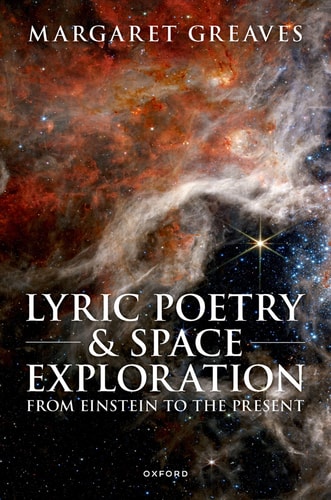
Lyric Poetry and Space Exploration from Einstein to the Present
0
0
As an Amazon Associate and affiliate partner, Menrva Books earns from qualifying purchases. Learn more
Author Description
Poetry and astronomy often travel together in the political sphere, from Milton's meeting with Galileo under house arrest to NASA's practice of launching poems into space. Anchored in the post-war period but drawing on a long history of poetry and science, Lyric Poetry and Space Exploration from Einstein to the Present charts the surprising connection between poetry and extra-terrestrial space. In an era defined by the vast scales of globalization, environmental disaster, and space travel, poets bring the small scales of lyric intimacy to bear on cosmic immensity.While outer space might seem the domain of more popular genres, lyric poetry has ancient and enduring associations with cosmic inquiry that have made it central to post-war space culture. As the Cold War played out in space, American institutions and media - from NASA to Star Trek - enlisted poetry to present space exploration as a peaceful mission on behalf of humankind. Meanwhile, poets from across the globe have turned to the cosmos to contest American imperialism, challenging conventional ideas about lyric poetry in the process.Poets including Elizabeth Bishop, Adrienne Rich, Seamus Heaney, Derek Walcott, Agha Shahid Ali, and Tracy K. Smith invoke the extra-terrestrial to interrogate national histories alongside their craft. Dazzled by the aesthetics of astronomy but wary of its imperial uses, poets employ astronomical figures and methods to imagine how we might care for both ourselves and others on a shared planet.
Menrva's Summary
THE THESIS
This work investigates the intersection of lyric poetry and space exploration, questioning how poets utilize cosmic imagery to navigate the tension between scientific advancement and political imperialism. Margaret Greaves examines the post-war era through the lens of literary history, arguing that lyric poetry serves as a vital tool for reconciling the vast scales of space travel with the intimacy of human experience. By analyzing the works of prominent poets alongside the institutional narratives of NASA and Cold War media, the author demonstrates how the cosmos functions as both a site of wonder and a theater for geopolitical critique.
THE SCOPE MAP
What You Will Find
- Analysis of post-war poetry by figures such as Elizabeth Bishop, Adrienne Rich, and Tracy K. Smith.
- Examination of the role of poetry in American space culture and institutional propaganda.
- Exploration of how astronomical metaphors are used to address national history and environmental concerns.
Scope Limits
- The text does not provide a comprehensive history of space exploration technology.
- It does not focus on science fiction prose or popular media beyond its intersection with poetic practice.
THE AUTHORITY PERSPECTIVE
Scholars and critics recognize this text as a significant contribution to the study of literature and science, noting its ability to bridge the gap between aesthetic analysis and political history. Readers frequently highlight the author's nuanced approach to how poets reclaim the cosmos from imperialist narratives.
Page Count:
240
Publication Date:
2023-09-22
Publisher:
Oxford University Press
ISBN-10:
0192867458
ISBN-13:
9780192867452
Poetry
Literary Criticism
Post-War
Poetry
Science History
Astronomy
Community Tags
Other Editions(3)


Similar Books