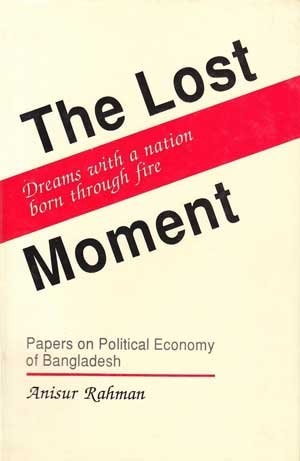
The Lost Moment: Dreams with a Nation Born Through Fire: Papers on Political Economy of Bangladesh
0
0
As an Amazon Associate and affiliate partner, Menrva Books earns from qualifying purchases. Learn more
Author Description
After tracing the conflict that gave birth to Bangladesh, a member of the first Planning Commission of the new country presents us with the prescriptions he wrote for the nation to start building itself upon the glory of its independence war. These included a policy of shared austerity, and educational and cultural reforms to establish the dignity of labour and to involve all classes in the society in manual labour for national reconstruction, along with structural and institutional reforms to move toward socialism which was a mandate for the government. As the country took a less glorious course, we have reports on Anisur Rahman's personal attempt to motivate student communities to go to the people. The chapters in this book show deep faith in the ordinary people of the country who in Rahman's view, no matter how poor they are, deserve no sympathy but only respect. Rahman's diary of a relief operation is a moving corroboration of this extraordinary philosophy. His discussions on socialism combine incisive original questioning of conventional socialist platitudes, with a sense of imperative that Bangladesh must follow radical methods of mobilizing, its huge labour force to stand up as a proud nation. In a postscript on the evolution of the country's political economy to date Rahman sees the quantum of foreign assistance as the principal stimulus for continuous degeneration of the society. Rahman's thoughts are of more than historical interest, for the nation is still looking for a way out of its economic stagnation and all-round demoralization.
Menrva's Summary
THE THESIS
This book investigates the political economy of Bangladesh, particularly focusing on the prescriptions for nation-building following its independence war and the subsequent trajectory of its development. Md. Afrazur Rahman, a member of the first Planning Commission of Bangladesh, presents his original policy recommendations for national reconstruction, emphasizing shared austerity, educational and cultural reforms to instill the dignity of labor, and structural changes towards socialism. The book also includes reports on attempts to motivate student communities and a diary of a relief operation, showcasing Rahman's deep faith in the common people. His analysis of socialism challenges conventional ideas while stressing the imperative for Bangladesh to mobilize its labor force to achieve national pride. A postscript critiques the role of foreign assistance in the country's ongoing degeneration.
THE SCOPE MAP
- Analysis of the conflict that led to the birth of Bangladesh.
- Policy prescriptions for nation-building from the first Planning Commission.
- Discussions on shared austerity, educational, and cultural reforms.
- Exploration of structural and institutional reforms towards socialism.
- Personal accounts of motivating student communities and relief operations.
- Critique of conventional socialist platitudes and mobilization of labor force.
- An examination of the role of foreign assistance in Bangladesh's political economy.
THE AUTHORITY PERSPECTIVE
This collection of papers by Md. Afrazur Rahman offers a critical examination of Bangladesh's post-independence political economy, drawing from his direct involvement in the nation's early planning. The work is likely to be of significant interest to scholars and policymakers concerned with development economics, political science, and the history of post-colonial nations. Rahman's insights into socialism and the impact of foreign aid provide a unique perspective on the challenges faced by developing countries striving for self-reliance and national dignity.
Page Count:
202
Publication Date:
1993-01-01
Publisher:
University Press
ISBN-10:
9840512234
ISBN-13:
9789840512232
Economics
Politics
Non-Fiction
History
Community Tags
Similar Books