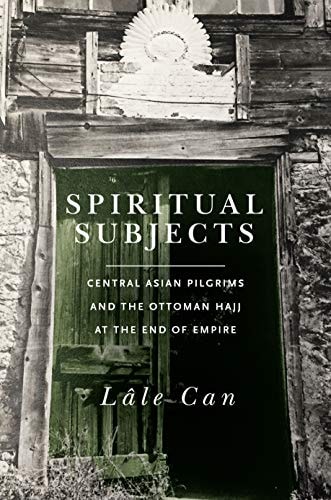
Spiritual Subjects: Central Asian Pilgrims and the Ottoman Hajj at the End of Empire
0
0
As an Amazon Associate and affiliate partner, Menrva Books earns from qualifying purchases. Learn more
Author Description
At the turn of the twentieth century, thousands of Central Asians made the annual pilgrimage to Mecca. Traveling long distances, many lived for extended periods in Ottoman cities dotting the routes. Though technically foreigners, these Muslim colonial subjects often blurred the lines between pilgrims and migrants. Not quite Ottoman, and not quite foreign, Central Asians became the sultan's spiritual subjects. Their status was continually negotiated by Ottoman statesmen as attempts to exclude foreign Muslim nationals from the body politic were compromised by a changing international legal order and the caliphate's ecumenical claims. Spiritual Subjects examines the paradoxes of nationality reform and pan-Islamic politics in late Ottoman history. Lâle Can unravels how imperial belonging was wrapped up in deeply symbolic instantiations of religion, as well as prosaic acts and experiences that paved the way to integration into Ottoman communities. A complex system of belonging emerged--one where it was possible for a Muslim to be both, by law, a foreigner and a subject of the Ottoman sultan-caliph. This panoramic story informs broader transregional and global developments, with important implications for how we make sense of subjecthood in the last Muslim empire and the legacy of religion in the Turkish Republic.
Menrva's Summary
THE THESIS
This book investigates the complex status of Central Asian pilgrims in the late Ottoman Empire and their negotiation of belonging as spiritual subjects. Lâle Can explores how thousands of Central Asians, undertaking the annual pilgrimage to Mecca, became both migrants and pilgrims, blurring the lines between foreign nationals and subjects of the Sultan. The book examines the paradoxes of nationality reform and pan-Islamic politics, detailing how imperial belonging was intertwined with religious symbolism and everyday experiences. It reveals a system where individuals could legally be both foreigners and subjects of the Ottoman sultan-caliph, informing broader understandings of subjecthood in the last Muslim empire.
THE SCOPE MAP
- The experiences of Central Asian pilgrims traveling to Mecca at the turn of the twentieth century.
- The negotiation of status between pilgrims, migrants, and Ottoman subjects.
- The role of nationality reform and pan-Islamic politics in the late Ottoman Empire.
- The intersection of religion, law, and imperial belonging.
- Case studies of Central Asian communities in Ottoman cities along pilgrimage routes.
- Implications for understanding subjecthood in the Ottoman Empire and the legacy of religion in the Turkish Republic.
THE AUTHORITY PERSPECTIVE
The book examines the intricate relationship between religious devotion and imperial identity in the late Ottoman Empire, focusing on the unique position of Central Asian pilgrims. It highlights how these individuals navigated complex legal and political landscapes, becoming 'spiritual subjects' who were simultaneously foreign and integral to the Sultan's domain. The work is noted for its detailed exploration of how religious practice and everyday life shaped notions of belonging and integration within Ottoman communities. This study offers a nuanced perspective on transregional and global developments concerning subjecthood and the enduring influence of religion in the formation of the Turkish Republic.
Page Count:
257
Publication Date:
2020-01-01
Publisher:
Stanford University Press
ISBN-10:
1503610179
ISBN-13:
9781503610170
History
Non-Fiction
Ottoman Empire
Migration Studies
Islamic History
Pilgrimage
Community Tags
Similar Books