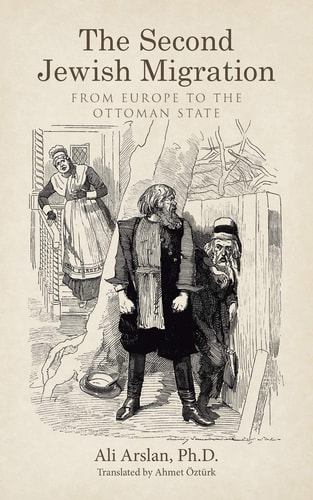
The Second Jewish Migration From Europe to the Ottoman State
0
0
As an Amazon Associate and affiliate partner, Menrva Books earns from qualifying purchases. Learn more
Author Description
Too often, when examining the history of Jews during the Ottoman period, schlars focus solely on the founding of Israel after World War II and the victimization of Palestinians. But it's important to look at every dimension of Jewish life during this time. Ali Arslan, Ph.D., takes a broad view of Jewish/Ottoman history in this academic work, beginning with how the Jews of Western Europe were forced to leave the Ibeian Peninsula and found the Ottomans waiting for them with welcoming arms. The Ottomans saved them from oppression and paved the way for the Jews of Central and Eastern Europe to live more comfortable lives compared with those in Western countries. The Ottomans respected the Jewish way of life and allowed them to move freely within the empire. Both the Ottomans and the Jews should be commended for their productive collaboration at the end of the nineteenth century and the beginning of the twentieth century. Their spirit of cooperation should be seen as a beacon of hope and a roadmap of how people today can overcome differences.
Menrva's Summary
THE THESIS
The Second Jewish Migration From Europe to the Ottoman State examines the historical narrative of Jewish migration into the Ottoman Empire, challenging conventional perspectives that often focus narrowly on post-WWII events. The book details how Jews fleeing persecution in Western Europe, particularly from the Iberian Peninsula, found refuge and acceptance within the Ottoman State. It argues that this migration was not merely an act of salvation but the beginning of a mutually beneficial relationship that allowed for the flourishing of Jewish life and culture within the empire.
THE SCOPE MAP
- Detailed account of the forced migration of Jews from Western Europe, specifically the Iberian Peninsula, to the Ottoman State.
- Analysis of the Ottoman Empire's welcoming policies and their impact on Jewish refugees.
- Exploration of the lives of Jews in Central and Eastern Europe in comparison to their Western counterparts.
- Examination of the Ottoman respect for Jewish culture and freedom of movement within the empire.
- Discussion of the productive collaboration between Ottomans and Jews in the late 19th and early 20th centuries.
- The book's argument for viewing this historical cooperation as a model for contemporary intergroup relations.
THE AUTHORITY PERSPECTIVE
This academic work by Ali Arslan, Ph.D., offers a comprehensive view of Jewish history within the Ottoman Empire, moving beyond common post-WWII narratives. The book highlights the Ottoman Empire's role as a sanctuary for Jews fleeing European persecution, emphasizing the mutual respect and collaboration that characterized their coexistence. It posits that the Ottoman approach to Jewish settlement and cultural preservation serves as a valuable historical precedent for understanding interfaith and intercultural cooperation.
Page Count:
224
Publication Date:
2016-04-29
Publisher:
iUniverse
ISBN-10:
1491794631
ISBN-13:
9781491794630
History
Non-Fiction
Ottoman Empire
Jewish History
Migration Studies
Community Tags
Similar Books