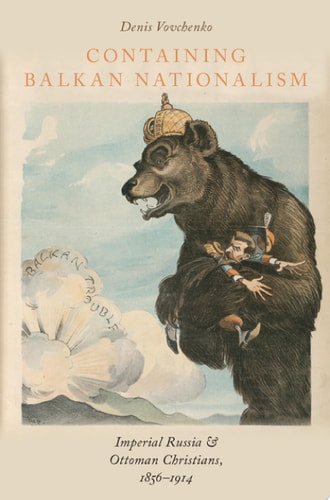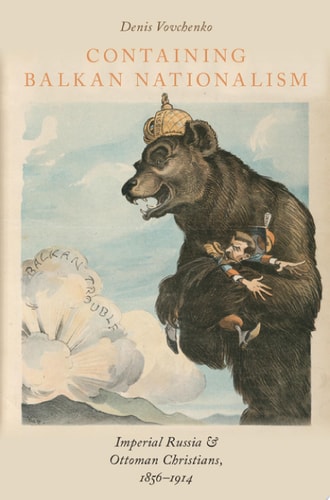
Containing Balkan Nationalism: Imperial Russia and Ottoman Christians, 1856-1914
0
0
As an Amazon Associate and affiliate partner, Menrva Books earns from qualifying purchases. Learn more
Author Description
Containing Balkan Nationalism focuses on the implications of the Bulgarian national movement that developed in the context of Ottoman modernization and of European imperialism in the Near East. The movement aimed to achieve the status of an independent Bulgarian Orthodox church, removing ethnic Bulgarians from the jurisdiction of the Patriarchate of Constantinople. This independent church status meant legal and cultural autonomy within the Islamic structure of the Ottoman Empire, which recognized religious minorities rather than ethnic ones.Denis Vovchenko shows how Russian policymakers, intellectuals, and prelates worked together with the Ottoman government, Balkan and other diplomats, and rival churches, to contain and defuse ethnic conflict among Ottoman Christians through the promotion of supraethnic religious institutions and identities. The envisioned arrangements were often inspired by modern visions of a political and cultural union of Orthodox Slavs and Greeks. Whether realized or not, they demonstrated the strength and flexibility of supranational identities and institutions on the eve of the First World War. The book encourages contemporary analysts and policymakers to explore the potential of such traditional loyalties to defuse current ethnic tensions and serve as organic alternatives to generic models of power-sharing and federation.
Menrva's Summary
THE THESIS
This book investigates how Imperial Russia utilized supraethnic religious institutions to manage and contain the rise of ethnic nationalism among Ottoman Christians between 1856 and 1914. Denis Vovchenko, a scholar of Russian and Balkan history, synthesizes diplomatic records, ecclesiastical archives, and intellectual discourse to argue that Russian policymakers promoted Orthodox identity as a stabilizing alternative to the fragmenting forces of ethnic nationalism. By examining the intersection of Ottoman modernization and European imperial interests, the author demonstrates how religious structures were leveraged to maintain regional order.
THE SCOPE MAP
What You Will Find
- Analysis of the Bulgarian national movement and the struggle for an independent Orthodox church.
- Examination of the diplomatic collaboration between the Russian Empire and the Ottoman government.
- Exploration of the concept of supraethnic identity as a tool for political stability.
Scope Limits
- The study focuses primarily on the period between 1856 and 1914, excluding post-WWI developments.
- The analysis is centered on Russian and Ottoman interactions, with less emphasis on the internal domestic policies of other European powers.
THE AUTHORITY PERSPECTIVE
Historians and political scientists recognize this work as a rigorous examination of the intersection between religion and statecraft in the late Ottoman period. Readers frequently note the academic density of the prose and the depth of the archival research presented by the author.
Page Count:
357
Publication Date:
2016-01-01
Publisher:
Oxford University Press
ISBN-10:
0190612916
ISBN-13:
9780190612917
History
Ottoman Empire
European History
Religious History
Nationalism
Balkan History
Military History
International relations
Community Tags
Similar Books